Showing posts with label things that are going away. Show all posts

Thursday, May 19, 2016

10 commonplace things that are disappearing

A year ago, I wrote about “10 things doomed to go the way of the dinosaur.”
That list included pennies, business cards, phone books, newspapers and the U.S. Postal Service, among other things.
As I said at the time, some of these things will be stubbornly persistent but the future is clear. It may take many years, but they are destined to fade away. Seriously, why does the U.S. still have pennies and phone books?
Comedian John Oliver joined the movement to eliminate the penny in a funny segment on his HBO show “Last Week Tonight” in November.
What follows is a list of 10 commonplace things that are disappearing.

1. Music CDs

Rapper Kanye West recently announced that he no longer plans to put out music on CDs.
Music sales on physical media, including CDs, have been on a long decline. First, digital downloads (Apple iTunes) took a bite out of physical media sales. Now streaming services (Spotify, Apple Music, etc.) are causing declines in both physical media and digital downloads.
You need look no further than the shrinking CD section at Best Buy stores to see what’s happening to music sales.

2. Autographs

Years ago when people met a celebrity, they’d want to get his or her autograph. Today, selfies are the memento of choice.
Singer Taylor Swift noted in 2014 that autographs became “obsolete” after Apple came out with the first iPhone with a front-facing camera. That was the iPhone 4, released in June 2010.

3. Journalism schools

The declining newspaper industry and resulting job losses have spurred many universities to morph their journalism schools into media and marketing schools. Some universities (such as Emory and the University of Colorado) have dropped their journalism programs.

4. Alarm clocks

In the smartphone age, who needs an alarm clock anymore? It’s certainly a heck of a lot easier to set an alarm on a smartphone than a clock radio.
Smartphones also have replaced separate cameras, GPS navigation devices and other gadgets.

5. Cursive handwriting

Kids aren’t taught cursive handwriting in school anymore. So they have a tough time reading cards and letters sent by their grandparents. Typing is much more important. About the only thing they’ll write in cursive is their signature.

6. Postcards

Postcards are fading away along with letters sent via the U.S. Postal Service. Why send a postcard on vacation when you can instantly send a photo via text or post it on social media?
Meanwhile, the U.S. Postal Service continues to decline in relevance. (See “The Postal Service Is Delivering Itself Into Bankruptcy, Audit Shows.”)

7. Payphones

The rise of cellphones has done away with the need for payphones and phone booths. New York City is replacing phone booths with free Wi-Fi stations and information kiosks.

8. Appointment books

I’m stubbornly holding on to my weekly at-a-glance schedule book. But a lot of people have switched to online schedules using Microsoft Outlook and other programs. I just like using paper schedule books for writing work and personal notes and appointments. But the tide has clearly turned in favor of electronic calendars.

9. TV Guide magazine

How is TV Guide magazine still around? TV Guide was created at a time when television shows were scheduled. In the on-demand video streaming world, you don’t need a grid schedule of what’s on. Also, with program information available online, a weekly printed magazine seems archaic.

10. Keys

Many cars already have replaced keys with keyless ignition systems. These wireless push-to-start systems use small battery-powered fobs you can leave in your pocket. Smartphones with near-field communication (NFC) technology are starting to replace hotel room keys and cards and could one day be used with cars and home door locks as well.

Photo: Music compact discs. (Photo by Flickr user m01229)

Thursday, May 12, 2016

Video game arcades making a limited comeback

As someone who spent a lot of time in video game arcades as a teenager, I am pleased to see a few such entertainment joints making a comeback.
At a time when people can play sophisticated games on home consoles and even mobile devices, it is surprising that folks would still want to go to an arcade to play.
But as I mentioned in my article “Digital culture means less public culture,” there are fewer places for people to just hang out today. People naturally want to socialize in a fun public space.
Many of the new arcades, such as Barcade in New York City, serve alcohol and cater to the Generation X crowd. They are an update on the old pool halls of yesteryear.
Not all of the new arcades have been successful, but enough have to keep the dream alive.

Related articles:

The Arcade Is Back, Now With Beer (Bloomberg Businessweek; April 1, 2015)

Why Arcades Are Making A Comeback (Geektyrant; May 2015)

This is How the Arcade Survives in 2015 (Playboy; Sept. 14, 2015)

Photo: Video games at 16-Bit Bar + Arcade in downtown Columbus, Ohio. (Photo by Flickr user Sam Howzit.)

Tuesday, May 3, 2016

Repurposed urban structures: phone booths and newsstands

Creative destruction caused by changing times has led to some interesting new uses for old urban structures.
Phone booths and newsstands are being given new life as their old uses disappear.
In New York City, phone booths are being converted into free Wi-Fi kiosks.
In January, the city began its plan to replace about 7,500 payphones with Wi-Fi hotspots.
“The hot spots will sit atop a 9.5-foot tall box with electronic screens on each side to display advertising,” the Wall Street Journal reported. “Sandwiched between the sidewalk ads will be an Android tablet that can be used to place free phone calls and surf the Web.”
Payphones in the age of low-cost mobile phones have become something of a joke.
CollegeHumor posted a photo of some payphones with the title “Endangered Species Huddling Together for Survival.”
The New York Times not so long ago had to explain what a phone booth is for one of its articles.
Phone booths are such curiosities that the Times recently ran an article about one neighborhood saving its phone booths.
Newsstands also face extinction as more readers skip newspapers and magazines to read online.
In Chicago, old newsstands have been turned into healthy food kiosks. (See article by the Chicago Tribune.)

Photo: A free Wi-Fi phone booth in New York City. (Photo by Flickr user Mike.)

Sunday, April 24, 2016

Autographs going away because of selfies

Years ago when people met a celebrity, they’d want to get his or her autograph. But no more. Selfies are the memento of choice today.
After all, why get a squiggly line of barely legible ink when you could get a photograph with a celebrity and quickly post it to social media?
A photo with a celebrity shows a more personal connection to that person than a signature on a piece of paper.
Also, everyone has a smartphone on them, but few carry a pen and paper these days.
Singer Taylor Swift noted in 2014 that autographs have become “obsolete.”
“I haven’t been asked for an autograph since the invention of the iPhone with a front-facing camera,” Swift said in a Wall Street Journal column.
Recently a 12-year-old girl was invited on stage by singer Adele for a selfie after holding up a sign written on a napkin for nearly two hours, the Daily Mail reported.
Another recent article showed how fans will try to take selfies with celebrities even when the subjects resist.
And President Barack Obama said earlier this year that he’s “fed up” with posing for selfies.
Just like some celebrities refused to sign autographs in the old days, some today will likely say no to selfies.

Photo: President Barack Obama poses for a selfie with several YouTube video stars in January. (See articles by CNN and the Huffington Post.)

Saturday, April 9, 2016

Kanye West is right about CDs being marked for death

Last month, hip-hop artist Kanye West announced that he would not issue his new album on compact disc. His decision might not make good business sense, since CDs still generate a lot of revenue. But it’s another indication that music sold on physical media is on the wane.
Last year, music on physical media accounted for 28.8% of U.S. music sales. It trailed streaming (34.3%) and digital downloads (34%), according to the Recording Industry Association of America (RIAA).
Music on physical formats generated $2.02 billion in 2015, down 10% from the prior year. Most of that ($1.52 billion) came from album CDs. Unit sales of album CDs dropped 13.9% to 122.9 million in the U.S. last year, RIAA said.
Only streaming music services are showing growth right now, which is why West is focused on delivering his new album “The Life of Pablo” through Tidal.
“No more CDs from me,” West wrote on Twitter on March 7. (See articles by NBC and Engadget.)
Of course, the mercurial West could always change his mind.

Photo: Cover of Kanye West album “The Life of Pablo.”

Wednesday, April 6, 2016

Nostalgia for things that are obsolete

Many people like to reminisce about the way things used to be and how some things they once used have gone the way of the dodo bird.
The subject has been fodder for many click-bait articles online. (I’ve included a few examples below.) Often they’re presented as a list of changes that “will make you feel old.”
Among the first to mine this territory was Beloit College in Beloit, Wisconsin, with its Mindset List. Each August since 1998, Beloit College has released the Beloit College Mindset List, which provides a summary of cultural touchstones that shaped the lives of students entering college that year.
More recently, YouTube producers Ben and Rafi Fine, aka the Fine Brothers, have made a video series where they expose kids to the technology their parents probably used. (For example, see “Kids React To Typewriters” and “Kids React to VCRs.”)

The following are some listicles about obsolete items:

Update (Sept. 3, 2016): I added a couple new ones:

10 Things That Will Soon Disappear Forever (Kiplinger; July 2016)

19 Forgotten Relics We’re Still Nostalgic For (Cracked; June 16, 2016)

5 Awesome Things That’ll Be Gone Forever By, Like, Soon (Cracked; May 24, 2016)

17 Things From Your Life That Your Kids Would Never Recognize (Good Housekeeping; Nov. 2, 2015)

23 Things Your Kids Will Never Understand (The Huffington Post; Aug. 26, 2013)

11 “Modern Antiques” Today’s Kids Have Probably Never Seen (Mental Floss; April 11, 2012)

Photos:
Hand-cast cement “modern fossils” by artist Christopher Locke of Austin, Texas (top);
Cover of “The Lonely Phonebooth” (2010) by Peter Ackerman (author) and Max Dalton (illustrator). The two also did “The Lonely Typewriter” (2014).


Friday, July 24, 2015

Journalists my age learned to write on typewriters

Journalism memory lane: Part 1 

When I was in journalism school at the University of Illinois in Urbana-Champaign, we didn’t have personal computers. We used typewriters.
That was 1982-84 in what was then called the College of Communications. (The university changed the name in 2008 to the College of Media.) The school offered degrees in print journalism, broadcast journalism and advertising. My bachelor’s degree is in print journalism.
There were computers on campus, but they were big IBM mainframes in which you had to feed paper punch cards. Students had to sign up for time to use them and they were mostly for engineering and business students. I never used them.
The university also had a ground-breaking networked computer system called Plato.
But let’s get back to my low-tech journalism writing courses.
We typed our articles for class on 8 ½-by-11 sheets of paper on typewriters and used copy-editing markup symbols to make corrections.
To write term papers for my classes, I often used the Atex computer system at the college newspaper, the Daily Illini. I’d print the assignments out on a dot-matrix printer that was fed perforated paper. My assignments would come out in one long strip and I’d have to tear off each sheet at the perforations before handing them in.
Our graphics class had a pagination machine for printing out camera-ready copy. You’d type in your text, along with codes for font styles, sizes and column widths. The machine would print out headlines and body copy suitable for physical cut-and-paste layout.
Columns of text and headlines had to be cut by hand with a small blade on a plastic board for positioning on a layout sheet. Text, photos and graphics would be run through a roller that would apply hot wax to the back. Then you’d paste it on a blank newspaper grid to assemble the page. When finished these page designs would be photographed and etched onto printing plates.
This was before personal computers and desktop publishing software. Now, all layout and design is done on the computer screen.
The paste-up method of newspaper design was used for about a decade after I graduated.
I learned photojournalism at the University of Illinois the old fashioned way as well, with 35 mm film cameras and chemical baths for developing negatives and prints. There were dark rooms with special gear for projecting light through negatives onto photo-sensitive paper. It was a delicate and time-consuming way to make photos.
Newspapers were still a healthy business in the mid-1980s, although they had been on a slow, steady decline.
The biggest change in the industry while I was in college was the launch of USA Today in September 1982. It revolutionized how newspapers looked. Newspapers across the country copied USA Today’s style, including its generous use of color photos and graphics, informative charts, and short stories that didn’t jump to inside pages.
Newspaper journalists at the time derided USA Today as McPaper. They said it dumbed down journalism by reducing long-form articles to infographics and bite-sized stories.
The transition to PCs would be the next big change. But that wouldn’t come for another decade for most newspapers.

Part 2: Before there were PCs at newspapers, there was Atex.

Photos: IBM Selectric typewriter (photo by Flicker user Tomislav Medak); front page of first issue of USA Today on Sept. 15, 1982. 

Before there were PCs at newspapers, there was Atex

Journalism memory lane: Part 2 

After graduating from the University of Illinois at Urbana-Champaign with a bachelor’s degree in journalism in 1984, I worked for eight years for the Small Newspaper Group at papers in Streator, Moline and Rock Island, Illinois.
Like many newspapers at the time, they used the Atex computer system of servers and thin-client computers.
We had green-screen terminals at our desks to write our articles, which were stored in another room on a central computer.

To create a story in the system, you’d fill out the fields at the top of the screen, including byline and “slug” or name for the article.
The Atex system generally performed pretty well, but occasionally your terminal would crash and you’d lose all of your work since you last saved it. Writers were encouraged to manually save their work by entering a “save” command. But this was back of mind on deadline sometimes. I can remember having to start from scratch after losing nearly complete stories that I hadn’t saved. Talk about stressful.
In the mid to late 1980s and early 1990s (before the Internet and the widespread adoption of PCs), research for news articles was a lot more time intensive. Courthouses, for instance, only had paper records and handwritten docket books. Searching for criminal files and lawsuits was a manual process.
Even newspapers’ own libraries were antiquated. Articles were clipped and filed by subject. Reporters had to call staff librarians to dig up old articles in the “morgue.”
Writers were encouraged to keep their own files, including clipped articles, to save time on deadline. Of course, maintaining these records was a great time suck too. I used to spend my weekends getting organized.

When filing stories from the road in the late 1980s, I used a company-owned Radio Shack TRS-80 portable computer. It was popular with journalists because it was study and reliable. Reporters affectionately referred to the machines as Trash-80s.
The TRS-80 featured a tiny monochromatic screen on which you could view a few lines of text at a time.
You could file a story electronically by attaching acoustic couplers to the ear and mouth pieces of a standard phone and dialing into your company’s computer system. There was no Internet to route files at the time.
Since cell phones weren’t around, reporters had to use pay phones or another landline to check back to the office, dictate stories or file electronically.

Part 3: Early notebook PCs and America Online: The start of modern journalism.

Photos: A Winston-Salem Journal reporter enters her story into an Atex Systems terminal in 1981 (top); the glowing green screen of an Atex terminal (photo by Flickr user Lowell B); Radio Shack TRS-80 model 100 portable computer (photo from Photoree); TRS-80 with acoustic couplers (photo from Fast Horse).

Early notebook PCs and America Online: The start of modern journalism

Journalism memory lane: Part 3 

When I reentered the workforce in 1992, after taking a one-year break for graduate school, personal computers were being rolled out broadly in the publishing industry.
Smaller publications seemed to be first to make the plunge into PCs and desktop publishing. Bigger periodicals had large investments in systems like Atex and learning an entirely new method of publishing would be a major disruption to operations.
But the change was inevitable. Desktop publishing with PCs meant that publications could get rid of paste-up workers. Everything would be done digitally. PCs were more efficient and capable than the systems they replaced.
In the early 1990s, the battle between Apple Macintosh computers and Microsoft Windows-based computers was still raging. Art departments at newspapers preferred Macs. Editorial departments sided with Windows machines.
The first computer I ever purchased was an Apple Macintosh PowerBook 180. The gray laptop had a 16-level grayscale display, 33 MHz microprocessor and 4 MB of RAM. With an internal fax modem and ClarisWorks software, the purchase set me back $2,145.
Before that, I had a Magnavox all-in-one word processor and printer.

It was a big deal when software was developed to share computer floppy disks between Mac and Windows machines. That way you could transfer text files from a Windows PC at work and read it on a Mac at home. Compatibility issues were a serious problem.
The next big shift in journalism was the arrival of Internet communications services. Early online services of prominence were America Online, CompuServe and Prodigy. Initially they took a walled garden approach to delivering the Internet to customers. They wanted customers to stay within their news and e-mail services. The floodgates to the open World Wide Web didn’t occur until the Netscape browser appeared on the scene in mid-1990s.
In the early days of the commercial Internet, I used mostly AOL and CompuServe. They were dial-up services and they were painfully slow.
When traveling you had to find local access numbers to dial into or pay long-distance toll charges. AOL and CompuServe had international access numbers too. But when those numbers were busy or unavailable, I would occasionally have to call long distance back to the States to file a story electronically.
Today we take for granted how easy it is to get the Internet on notebook computers.
Public Wi-Fi hotspots didn’t start showing up until after 2000.
In the days before Wi-Fi, you had to make sure you had a dial-up modem for your notebook PC. And you had to find a landline phone where you could unplug the phone cable from the wall or the phone itself to plug into your laptop. Then you had to configure the system to dial the Internet access number. That meant having to dial a 9 to get an outside line from a hotel or business and a 1 for long distance in the U.S. You had to manually type in those instructions to the configuration software. Sometimes it was trial and error to get it to work. It was a royal pain in the butt.
And Windows notebook computers weren’t very reliable back then. I had a number of company-owned notebooks die on me.
I especially remember a Texas Instruments brand laptop that failed on a trip to Hong Kong. I made the mistake of picking up the notebook with one hand from the corner of the machine. I felt the plastic chassis bend and heard the motherboard inside crack. And that was the end of that PC.
Today notebook chasses are super sturdy.

Part 4: Journalism at the dawn of the digital age.

Photos: Apple Macintosh PowerBook 180c laptop (photo from Wikipedia Creative Commons); Magnavox VideoWriter Word Processor (photo from Click Americana.)

Journalism at the dawn of the digital age

Journalism memory lane: Part 4

Personal computers, the World Wide Web, e-mail, cell phones, digital cameras, digital voice recorders and other tech advancements make things so much easier for journalists today. At the same time, now everyone has access to the same tools and can play journalist. (Hence the rise of bloggers and citizen journalists.)
Simple things like finding information on publicly traded companies or even corporate contact information used to be a chore. I remember poring over paper files at the Securities and Exchange Commission office in Washington, D.C. With the Web, there’s no need to leave the office for that any more.
Reporters used to spend a lot more time on the phone checking facts that now can be easily verified online.
Reporters also used to have a lot more paper clutter on their desks – files and documents they needed to research and write articles. Now that clutter has become digital – documents stored on PCs, bookmarks in Web browsers, and data in the Internet cloud.
The arrival of always-on, high-speed broadband Internet connections in the mid-1990s was a big deal. Getting a T-1 line at the office was a major coup for your workplace. Of course, now T-1 speeds are pokey.
My first e-mail account was through Rocketmail, which was purchased by Yahoo in 1997. I later abandoned it after it became inundated with spam e-mails. Today I use Web-based e-mail accounts from Yahoo and Google.
Old habits die hard and it took me a long time to switch from microcassette audio recorders to digital audio recorders for interviews. That switch happened maybe six years ago. I got sick of dealing with piles of microcassette tapes.
Other things that have gone bye-bye over the years include newspaper clips (why bother when your articles are searchable online?), Rolodexes and business card holders (LinkedIn and web searches have replaced those).
My first cell phone was a Motorola bag phone around 1990 that I used only in my car for “emergencies.” Voice minutes were expensive then. I didn’t use it for work. Using a cell phone for work didn’t happen for another 10 years or so.
Technology, like PCs, the Internet and mobile phones, has made journalists much more productive. But the news cycle has gone 24/7 and we’re always reachable.

Photo: Sony microcassette recorder (top); Rolodex business card file. 

Monday, February 16, 2015

10 things doomed to go the way of the dinosaur

1. The U.S. Postal Service

The independent government agency will be in a period of decline for years to come, but the future is clear. The U.S. Postal Service as we know it will gradually fade away. And along with it, so will go postcards, the hobby of stamp collecting, disgruntled postal workers with a gun fetish, and other things.
(See “Mail boxes, stamp collecting threatened by Post Office demise.”)


2. Pennies

Americans finally are wising up to the fact that pennies are unnecessary and wasteful. One-cent coins cost 2 cents to manufacture, creating a money losing-proposition for the U.S. government. They also are a drag on productivity and a hazard to children and pets if swallowed. Plus, they are becoming irrelevant as financial transactions increasingly switch to electronic payment options.
(See “Time is running out for the U.S. penny.”)

3. One-dollar bills

The issue of eliminating the $1 bill from U.S. currency in favor of $1 coins comes up every few years. Old coots clinging to the past have saved the paper bill for now. But eventually the federal government will do the right thing and ax the $1 bill. Doing so could save taxpayers $4.4 billion over the next 30 years.
(See “U.S. needs to stop printing $1 bills.”)

4. Business cards

Business cards are being replaced by LinkedIn. The personal information on business cards can quickly become out of date. People change jobs, job titles, mailing addresses, phone numbers and email accounts. The beauty of LinkedIn is that the user keeps his or her contact information and career data current themselves. Business cards are joining Rolodexes in the dust bin.
(See “Business cards becoming passe, replaced by LinkedIn.”)

5. Phone books

The clock is ticking for phone books. Most people today get phone numbers for businesses, government agencies and persons by searching the Internet. But there’s still money to be made selling advertising for yellow page directories, so phone books persist. But not for long.
(See “Phone books deserve to die.”)

6. Newspapers

Newspapers in print form are fading fast as more people get their news online. Some pundits are predicting that newspapers in the U.S. will start disappear en masse within a few years as circulation declines and production costs increase.
(See “The end of newspapers threatens paperboys and kidnapper props.”)


7. Magazines

Like newspapers, print magazines are declining in circulation, because of the rise of the Internet. Print magazines are likely to become a niche media as opposed to a mass media in the years to come. The cachet of being a magazine’s cover subject or cover model probably will diminish as well.
(See “Magazine sales continue to slide; Format’s future in doubt.”)

8. Copy editors

To save money, many publishers have cut the ranks of copy editors and fact checkers. The results have been a lot of Internet LOLs as the public shares the latest typos, misspellings and other embarrassing errors copy editors presumably would have caught.
(See “Copy editors are an expense some publishers don’t want.”)

9. Ownership of music, movies, other software

First it was physical media (CDs, DVDs, etc.) that were threatened by the shift to digital, now it’s ownership of entertainment and software. Consumers are shifting from owning digital media files to using subscription and ad-supported streaming media services. Plus, people are beginning to subscribe to PC software instead of owning it outright.
(See “Ownership of music, movies and software slipping away.”)

10. Concert and sports tickets as memorabilia and collectables

As more ticket sellers switch to electronic tickets that can be printed at home or scanned from a mobile device, collecting concert and sports tickets as mementos is likely to wane. A cheap printed ticket doesn’t have the same allure as a glossy, souvenir ticket. Plus, since they can be easily copied, they have no collector value. (See “Concert and sports tickets disappearing as memorabilia and collectables.”


Photos:
Post office comic by Marshall Ramsey (Postal Cartoons on Pinterest);
Mailbox as endangered species by Carmichael Lynch (See Carmichael Lynch Flickr page and article by Laughing Squid.)
Newspaper Road is a dead end (See article by Romenesko);
Concert Ticket Album for sale on Amazon.com.

Sunday, February 15, 2015

Concert and sports tickets disappearing as memorabilia and collectables

When I was a kid, people liked collecting matchbooks. In those days smoking was prevalent in bars, restaurants and hotels and a lot of those establishments would leave baskets of matchbooks at the checkout counter for people to take.
Now with smoking banned in most such businesses, matches have been replaced by mints at the checkout counter or reception desk.
Another collecting trend likely going by the wayside is saving concert and sports tickets as mementos. That’s because thick glossy souvenir paper tickets are giving way to cheap print-your-own tickets or e-tickets.
The benefits to event companies from the shift are obvious. The self-printed and e-tickets have bar codes that can be scanned at the gate, preventing fraud from counterfeit tickets.
But such tickets have no collector value since they’re typically unattractive and can be easily photocopied.
I still have tickets to some concerts that I went to the 1980s and ’90s. But young people today probably aren’t keeping their tickets. Instead, they’re more likely to use cellphone photos of the events as their mementos.

Photos: “Just the Ticket: Ticket Stub Organizer” by Peter Pauper Press sold on Amazon.com.

See also:

Is It The Death of the Concert Ticket?! infographic by Authority Tickets.

The Death of the Concert Ticket (The Presurfer; June 3, 2012)


Sunday, February 1, 2015

Copy editors are an expense some publishers don’t want

To save money, many news publishers have cut the ranks of copy editors and fact checkers. The result has been a lot of Internet LOLs as the public shares the latest typos, misspellings and other errors copy editors presumably would have caught.
When I started out in the newspaper business in the mid-1980s, news stories would pass through several editors before they were published. Reporters didn’t even write their own headlines.
Today in the 24-hour news cycle online, copy editors are seen as a bottleneck and an unnecessary expense.
Reporters these days write their own headlines, do search engine optimization (SEO) and often supply their own photos and videos. If a typo or error gets through, and it’s seen later, someone will edit it online after it’s published. Print editions are stuck with the mistakes.
Today, spell checking applications in word processor software have largely replaced copy editors. But spell check won’t catch many mistakes as the following examples prove.

“We may never no why he attacked” – headline from the Detroit Free Press in August 2012. (See image at top.)

“Let is snow, let is snow, let is snow” – headline from Brattleboro Reformer in Brattleboro, Vt., on Dec. 27, 2012.

“Atlanta’s Snow Debacle 2014! What happen? Why It Happen? Can it happen Again?” – headline from The Atlanta Voice for the Jan. 31-Feb. 6, 2014, issue.

The Birmingham News in Birmingham, Ala., misidentified a bunch of classic rockers in a graphic for a feature in March 2014.

See also “The year in media errors and corrections 2014” from the Poynter Institute.

Tuesday, November 25, 2014

Ownership of music, movies and software slipping away

First it was physical media that was threatened by the shift to digital, now it’s ownership of entertainment and software.
Consider the music business. For decades, physical ownership of music ruled, first with LPs and cassettes and then CDs. Then Apple changed the game when it launched the iTunes download store in April 2003.
Fast forward to today and iTunes sales are dropping as consumers switch to ad-supported and subscription streaming music services like Pandora and Spotify.
Why own the music when streaming is so convenient? You can access your favorite music from multiple devices without the hassle of finding your copy.
In the movie business, DVD sales are down as more consumers sign up for Netflix, Amazon Prime Instant Video and other subscription streaming services.
Once again, with streaming, people don’t have to load their personal copy of a video into a consumer electronics device. They just search from a menu and hit play.
Another benefit of streaming video vs. DVD is not having to slog through all those trailers, ads, piracy warnings and menus you get before you can actually watch the video you want. With streaming, it starts when you hit play.
However, a drawback is the likely disappearance of special features like deleted scenes, movie documentaries and director commentaries.
Computer software also is shifting from buy-and-own to monthly subscriptions. Microsoft, Adobe Systems and other software companies now offer to rent PC software applications as opposed to buy-upfront licensed software. This is part of the shift to cloud computing.
Amazon.com even has a subscription electronic book service called Kindle Unlimited.
It all sounds like a good deal, but consumers might end up paying more for software and entertainment content this way.
Also, if you don’t own something, you have less control over it. Some of the content you like could just disappear when a service loses the rights to it.
Plus, you usually need an Internet connection to access your content.
As with all new things, there are tradeoffs.

Wednesday, October 1, 2014

TV Guide magazine living on borrowed time

Every year I buy the Fall Preview issue of TV Guide magazine. And every year, the magazine gets harder and harder to find.
This year, I had to buy a copy of the issue on eBay. The magazine is not available in grocery stores and drug stores like it used to be. In the recent past, I’ve found it at Barnes & Noble bookstores, but those are getting scarce too.
The Sept. 15-21 issue of TV Guide is 94 pages and the coverage of the fall TV season seems light. By contrast, the Sept. 19-26 issue of Entertainment Weekly on the fall TV season is 140 pages and feels much more comprehensive.
Entertainment Weekly has long since taken the torch from TV Guide for fall preview issues.
I have every TV Guide fall preview issue since 1974 (41 issues in all). I wonder how long TV Guide has got left, especially as TV viewers continue to shift away from the broadcast networks, first to cable TV and now to over-the-top TV services like Netflix and Amazon Prime.
As of June 30, TV Guide magazine, owned by private equity firm OpenGate Capital, had a circulation of 1.91 million. That’s down from 2.68 million in 2009. It still has a lot of readers, most of whom are home subscribers, but it’s been on a steady decline.

Sunday, March 2, 2014

Magazine sales continue to slide; Format’s future in doubt

I love magazines, but the industry has been in decline for years, largely because of the rise of the Internet.
Magazines seem destined to go from a mass market to a niche media in the years to come.
Last month, the Alliance for Audited Media released its U.S. consumer magazine circulation data for the second half of 2013. Overall circulation declined 1.7% from a year earlier, with newsstand sales dropping 11%. Celebrity weeklies and fashion magazines were the biggest decliners, Adweek and the Wall Street Journal reported.
Digital editions rose sharply, up nearly 37%, but make up just 3.5% of total magazine circulation.
Time Warner has delayed the initial public offering and spinoff of its Time Inc. division because of the decline in its magazine business, the New York Post reported.
The prospects for print magazines are “generally gloomy,” Peter Osnos wrote in the Atlantic in December for an article titled “Can Print Magazines Save Themselves?
But “Mr. Magazine” Samir Husni is upbeat about the prospects for the industry.
In December, Husni wrote that new magazine launches were down only slightly in 2013, but their survival rate was way up.
Last month, Husni spotlighted 14 magazines launched since the dot-com era peaked in 2000. He said they showed the resilience of paper magazines.
Also in February, Husni wrote that magazine publishers are realizing that they can’t go all-digital. Magazines without print are “like Kojak without his sucker,” he said.

Photo: Cover of new magazine Editorialist featuring model Nina Agdal. 

Saturday, March 16, 2013

The end of newspapers threatens paperboys and kidnapper props

When printed newspapers eventually disappear, a host of related things will vanish as well.
Many people will look back at newspapers as a quaint notion from a simpler time. As news moves online, our society will lose some of our traditions and cultural touch points.
What follows is a list of some of those things going the way of the buggy whip along with print newspapers.

10 things that will disappear with print newspapers

1. Paperboys

Years ago, delivering newspapers was a good first job for boys and girls. Trucks would drop off bundles of newspapers in neighborhoods and young people willing to work hard for a little money would deliver the papers door-to-door.
An old newspaper joke was that multimillion-dollar corporations were putting their fate in the hands of 9-year-old boys.
Adult professional deliverers in cars have all but replaced the jobs for young paper boys and girls though.
But recently the New York Times profiled the world’s oldest paperboy, 93-year-old Newt Wallace. Since 1947, he’s walked the same paper route every week, delivering copies of the Winters Express to the residents of Winters, Calif. He’s truly among the last of a dying breed.

2. Newspaper boxes

Newspaper vending machines on city street corners will go to the scrap heap once print newspapers disappear.
But frankly with rising newspaper prices, those boxes haven’t been practical for a while, unless you’re a person who carries around a lot of change.

3. Newspapers as kidnapper props

The Onion, a satirical news website, ran an article a few years back with the headline, “Report: Majority Of Newspapers Now Purchased By Kidnappers To Prove Date.” The joke being, of course, that regular people don’t buy newspapers any more.
But newspapers are still being used by kidnappers for “proof of life” props in photos. In January, an Islamic terrorist group in the Philippines released a photo of an Australian man, Warren Rodwell, they had kidnapped more than a year earlier, and he was holding a newspaper to prove the date, according to the Australian newspaper.
Less common today are ransom notes using letters cut out of the newspaper.


4. Newspapers as movie props

Kidnappers in the movies also use newspapers as props. (See photo of actor David Morse in the 2000 movie “Proof of Life.”) What are they going to do when print newspapers go away?
Newspapers also are used in many ways to advance the plot in movies. My favorite is when time travelers check the year on newspapers, such as in “Back to the Future 2” (1998) where Marty McFly checks out a futuristic USA Today in October 2015. Let’s hope it’s still around in two years.


5. Newspapers for bird cages, catching paint, etc.

Newspapers have many uses beyond delivering the news. They’re handy for art projects, such as making paper mache, and are a great substitute for painting drop clothes. You can use them to line bird cages and hamster homes. Plus, they’re great for starting fires in the fireplace or fire pit. And they’re useful for packing fragile items. Try doing that with digital news.

6. Comic strips

Comic strips are disappearing one by one from the nation’s newspapers as budgets get cut because of shrinking circulation. Online comics have cropped up, but will never be as big as newspaper comic strips were in their heyday with “Peanuts,” “Doonesbury,” “The Far Side,” “Calvin and Hobbes” and others.
Long-time comics that have ended their runs in recent years include “Annie”, “Cathy” and “Brenda Starr.”
A documentary about the dire state of the comic strip, called “Stripped,” is currently in production. It was funded in part by a Kickstarter campaign.

7. Coupons

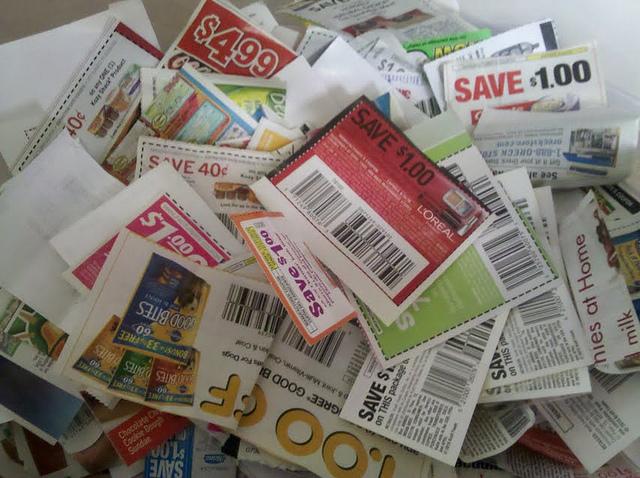
If newspapers go away, there won’t be any more paper coupons to clip. That’s going to be a big disappointment to those people into extreme couponing.
But just as newspaper articles and ads have moved online, so have coupons. Now people print them or save them to their smartphones to use.

8. One fun use for Silly Putty

Lifting newspaper images with Silly Putty is something practically all kids do. It’s one of the cool uses for Silly Putty. Once copied, you can stretch the putty and distort the image. After a while the pink Silly Putty turns gray from all the newspaper ink. Fun, but yucky.

9. Getting readers to pay for news

Print newspapers have two revenue streams: advertising and circulation. Online news largely has one revenue stream: advertising. That’s not likely to change for most news organizations.
Larger newspapers like the Wall Street Journal and New York Times can get away with charging heavy users for their content. But pay walls aren’t going to work for the majority of online newspapers. There are simply too many free alternatives on the Web.
So the extinction of print newspapers could mean the end of most readers paying for news.

10. Print journalists

Old-school journalists refer to themselves as ink-stained wretches and say they bleed ink. But the number of newspaper reporters is shrinking. Newsroom employment is at its lowest level since at least 1978, according to the American Society of News Editors. Many journalists have left newspapers to work in PR or as research analysts or have gone back to school for a business or law degree or found employment in some other profession.
One former newspaper reporter, Jon Campbell, recently started brewing beer. He calls his alcoholic beverage Unemployed Reporter Porter. The label is hilarious, but painfully so. (See articles by Jim Romenesko and SF Weekly.)
There’s even a website devoted to what former newspaper reporters are doing now called NewspaperAlum.


Photo credits: 
Retired newspaper vending machines (Flickr Vending Machines pool); screenshot from “Paperboy” video game; Washington, D.C., newspaper vending machines (photo by Elvert Barnes); kidnap victim Warren Rodwell; Ransom note card from Zazzle; Still from “Proof of Life”; “Back to the Future 2” newspapers from Pop Culture Geek and Not Right About Anything; coupon photo by Flickr user sdc2027; Silly Putty from ThinkGeek; Newroom jobs graphic from Reflections of a Newsosaur; and Unemployed Reporter Porter beer by Jon Campbell.

Tuesday, March 5, 2013

Newspaper death watch

Predicting when newspapers will cease to exist in paper form has become practically a sport among pundits in recent years.
Futurist and entrepreneur Ross Dawson of Sydney, Australia, predicted in August 2010 that newspapers in the U.S. will be the first to go. He forecast that U.S. newspapers in their print form will become “insignificant” in 2017.
The prediction was part of Dawson’s “Newspaper extinction timeline.” Mobile reading devices will become the primary news interfaces of the future, Dawson said. He also predicted that journalism will be largely “crowdsourced.”
Veteran media executive Alan Mutter blogged in January 2010 that increasing production costs could force many newspapers to stop printing within five years in a worst case scenario.
A January 2012 report by the USC Annenberg Center for the Digital Future predicted that “most print newspapers will be gone in five years.”
“The only newspapers in America that will survive in print form will be at the extremes of the medium – the largest and the smallest,” wrote Jeffrey Cole, director of the Center for the Digital Future. “It’s likely that only four major daily newspapers with global reach will continue in print: The New York Times, USA Today, the Washington Post, and the Wall Street Journal. At the other extreme, local weekly newspapers may still survive.”
The trends are clear and they aren’t good for print newspapers.
Young people don’t read newspapers. They prefer to get their news online. Classified ads, real estate listings, employment ads, movie show times and other advertisements have been picked up by Internet services. Google is taking the local advertising market with search-based ads. And national advertisers are moving to digital media.
In 2011, advertising revenues at newspapers fell to 1984 levels, according to the Newspaper Association of America. (Figures for 2012 should be out within two weeks.)
Adjusted for inflation, newspaper print ad revenues fell to a 60-year low in 2011, according to Mark Perry, a professor of economics and finance at the University of Michigan.
Business Insider editor-in-chief Henry Blodget put it succinctly: “Newspapers are screwed.”
And the number of journalists working at U.S. newspapers last year fell to its lowest point since the American Society of News Editors began its annual newsroom census in 1978, Mutter wrote.
Newspapers are struggling to adapt to the digital landscape.
The New York Times Co. is preparing to hold a fire sale for the Boston Globe and the Tribune Co. is looking to sell off its newspaper properties, including the Chicago Tribune and Los Angeles Times, to concentrate on its broadcast business.
Some newspapers are finding more value in their real estate than their operations. A big trend has been newspapers selling their storied headquarters. (The Miami Herald, Atlanta Journal-Constitution and Fort Worth Star-Telegram are among the newspapers that have unloaded their HQs in recent years, Poynter reports.) Even the Washington Post is interested in selling its primo digs.
Humor website the Onion did a funny take on the dire situation newspapers are in with its article “Economically Healthy ‘Daily Planet’ Now Most Unrealistic Part Of Superman Universe.”

Related resources:
Photos: Funny “newspaper fail” photos from Fail Blog (top) and DudeLOL.


Sunday, February 24, 2013

Phone books deserve to die

Who still uses phone books? Seriously.
Maybe older people still like the yellow pages and the white pages. But anyone younger than 50 has no use for them. When most people need the phone number of a business or person, they go online and search for it.
And yet new phone books keep getting printed year after year. Apparently there’s still advertising money to be made from those living fossils.
I’ve written about the pointlessness of phone books twice before, in 2009 and 2011. I guess every two years it really bugs me that they still exist.
It’s only a matter of time before phone books stop being printed. The sooner the better for the environment.
You can request that directory companies stop sending you phone books at the National Yellow Pages Consumer Choice & Opt-Out Site.

Related reading: 

Remember phone books? (Spine Out; Oct. 11, 2010)

Old Telephone Books: Possibly the world’s largest online collection of phone books.

Photos: Pile of phone books by Mental Floss; creative use of phone books from CollegeHumor.com.


Friday, February 22, 2013

Business cards becoming passe, replaced by LinkedIn

In years past, a business card was the best way to give someone your professional contact information.
But business cards quickly become dated. People change jobs, job titles, mailing addresses, phone numbers and e-mail addresses.
Online businesses like Plaxo cropped up to store business card information and try to keep it updated. But they were supplanted by LinkedIn, which now leads the space. LinkedIn gives people a way to maintain their own professional face online with a lot more information than business cards can hold.
Business cards haven’t completely gone away, but the trend is clear. The next step is for people to hand out business cards that have only their names and LinkedIn addresses.
The demise of business cards will turn the paper IDs into collector’s items. Some old business cards from famous people already are. I’ve included a few here, including the first business card of Microsoft co-founder Bill Gates, up top. Below are cards from Albert Einstein, Apple’s Steve Jobs, Google’s Larry Page and Twitter’s Jack Dorsey.


Websites for business cards of famous people:

Business Cards of 10 Famous People (Stock Logos; Sept. 5, 2011)

Business cards for Charles Lindbergh, John D. Rockefeller and Howard Hughes. (CharlesLindbergh.com; Feb. 1, 2002)

5 Business Cards That Changed the World (PsPrint; June 16, 2010)

Abraham Lincoln’s business card (America’s Library)

The Business Cards of Tech Giants (NextDayFlyers; Feb. 25, 2011)

First business card for Twitter creator and Square founder (Twitter; Jan. 25, 2012)