Showing posts with label public domain. Show all posts

Sunday, December 31, 2023

Expect Disney to get litigious as Mickey Mouse enters the public domain


The Walt Disney Co. will lose copyright protection over the earliest version of Mickey Mouse on Jan. 1, 2024. That’s a big win for the general public. But the media conglomerate isn’t going to cede control over the character without a fight.
The purpose of copyright is to provide legal protection of literary and artistic ideas for a limited period of time. After which, those ideas belong to humanity, which can freely reinterpret them, expand on them and copy them in new ways. Copyrights are similar to patents, which are for business ideas.
Over the years, copyright protection has been extended several times, mostly benefiting corporations. The last extension of copyright terms in the U.S. in 1998 is derisively referred to as the “Mickey Mouse Protection Act.”
On Monday, the cartoon “Steamboat Willie” (1928) will finally enter the public domain. It features the earliest depictions of Mickey Mouse, his love interest Minnie Mouse and his arch-nemesis Pete.
Since that original cartoon short, those characters have appeared in numerous cartoons, movies, TV shows, comics and other media. And that’s where things get complicated for copyright. Also, Mickey’s appearance and that of the other characters have changed over the years.
Anyone wanting to adapt Mickey Mouse will need to stick closely to what was shown in the original 95-year-old cartoon. Since “Steamboat Willie” was in black and white, you probably can’t even depict the character with red shorts and yellow shoes. He also didn’t wear white gloves until a 1929 cartoon, “The Opry House.”
Anything Mickey Mouse has done in the decades since is off limits. For instance, you likely can’t portray Mickey as a soldier, firefighter, band conductor, detective, secret agent, sorcerer and more, because Disney did those later.
Ironically, unflattering depictions of Mickey Mouse are most likely safest from Disney’s copyrights. This includes Dan O’Neill’s depiction of Mickey as a drug smuggler in the “Air Pirates Funnies” (1971), which legal critics argue should have been covered by the parody exception to copyright.
There have been many cases of copyright holding companies and creator estates filing lawsuits against perceived infringements of later works of a popular character, such as Sherlock Holmes.
Also, Mickey Mouse is covered by trademarks of the Walt Disney Co. So it’s doubtful anyone can make Mickey-themed products like T-shirts and plush animals. Unlike copyrights, trademarks last in perpetuity as long as they continue to be used commercially by the owner.

Related articles:

Why the original Mickey Mouse copyright is expiring on New Year’s Day (New York Post; Dec. 28, 2023)

Mickey Mouse, Long a Symbol in Copyright Wars, to Enter Public Domain: ‘It’s Finally Happening’ (Variety; Dec. 22, 2023)

Mickey Mouse will soon belong to you and me — with some caveats (Associated Press; Dec. 30, 2023)

Why Is Media Lamenting Disney’s ‘Loss’ Of Copyright Instead Of Celebrating The Public Domain? (Techdirt; July 25, 2022)

There’s bound to be legal drama when Batman and Superman enter the public domain in coming years — but experts caution there’s ‘no precedent’ for the thorny issue (Business Insider; Aug. 25, 2022)

Sunday, February 6, 2022

Dude with Sign, Cats of Disneyland, and other interesting websites


Some clever folks have made names for themselves with shticks they perform on social media.

Dude with Sign

For starters, there’s Dude with Sign. Seth Phillips started an Instagram account with photos showing him holding pretend protest signs. (See article by Washingtonian magazine.)

Emily’sTikTok.edu


Emily Zugay earned fame for her hilarious TikTok videos where she does terrible redesigns of corporate and product logos. She pretends she’s using her college design education to improve the logos of corporations and brands. (See articles by PRWeek, AdAge and UW-Stout.)

Jake Thumbs Up Emoji

Another TikTok user, Jakie62, does videos where he figures out when globes were designed based upon historical map changes. (See article by Laughing Squid.)

What follows are some other interesting websites.

Cats of Disneyland


There’s a niche Instagram account that posts photos of the feral cats that roam Disneyland in Anaheim, Calif. It is called Cats of Disneyland. (See article by Insider.)

Nineteenth century videos. Back to life.

A YouTube site called “Nineteenth century videos. Back to life” posts cleaned-up and colorized newsreel footage from the early 1900s and late 19th century. It includes film from the Titanic before its doomed voyage in 1912 and from the 1918 influenza pandemic. (See article by BGR.)

Public Domain Review

Readers of this website know that I’m a big supporter of the public domain and reasonable copyright laws. A good resource is the Public Domain Review.
Founded in 2011, The Public Domain Review is an online journal and not-for-profit project dedicated to exploring works of literature and art that have gone off copyright and are now in the public domain.
Every year it publicizes new works that have entered the public domain. Works entering the public domain in 2022 included A.A. Milne’s “Winnie-the-Pooh,” Ernest Hemingway’s “The Sun Also Rises” and Agatha Christie’s “The Murder of Roger Ackroyd.”

SorryAntivaxxer


The website SorryAntivaxxer documents the many antivaxxers who have spread misinformation about the Covid-19 pandemic and then died of the disease. Spoiler alert: there are many. (See article by the Los Angeles Times.)

Sunday, November 24, 2019

Sexy Goldilocks fairytale artwork

Over the past few years, while writing about revisionist fairytale artwork, I’ve shown how pop culture artists like to sex up familiar fairytale characters for adult audiences.
I’ve written about sexy depictions of public-domain fairytale characters, including the so-called Disney princesses. I’ve reviewed sexy artwork for Cinderella, Snow White, Sleeping Beauty, Rapunzel and more.
Today I’m going to finish my roundup of such works with a look at sexy depictions of Goldilocks from “Goldilocks and the Three Bears.”

Comic-book artist J. Scott Campbell drew Goldilocks for one of his Fairytale Fantasies calendars. (See above.)

U.K. digital artist Patricia Brennan depicted the three bears as polar bears for her art.


“Zenescope’s Grimm Fairy Tales” has illustrated Goldilocks several times.
Artist Eric Basaldua, aka Ebas, drew Goldilocks on a bear skin rug.


Artist Elias Chatzoudis drew a lingerie-clad Goldilocks in bed with three plush bears.


Artist Darrin Pepe sketched this picture of Goldilocks sprawled on bed after eating porridge.


Photographer Brian Cummings has done some dark pictorials featuring fairytale characters. Here’s his take on Goldilocks.


Lingerie retailer Lover’s Lane did this sexy Goldilocks cosplay.


Artist Dan Osbourne did a funny take on the Goldilocks tale.


Illustrator David Ryan Lompe, aka Oriantheblack, did this cheeky sketch of Goldilocks.


And finally, here’s a naughty sketch of Goldilocks that plays off the classic Coppertone ad. The unknown artist signed his work Black.


Monday, November 5, 2018

Disney ramps up Mickey Mouse promotions ahead of public domain debut

The copyright for the first Mickey Mouse film, “Steamboat Willie,” is scheduled to expire in 2024 and the work will enter the public domain. Then artists will be able to do their own interpretations of the work without having to get permission from copyright holder Disney and pay the media giant a licensing fee.
In the past, Disney has pressured the federal government to extend copyright terms to protect Mickey Mouse from falling into the public domain. The last extension was widely viewed as a corporate handout to Disney and others, which makes another extension unlikely.
Until the 1970s, copyright terms only lasted for 56 years. Now works published in 1923 or later are protected for 95 years.
Disney now is likely to use trademarks to extend its ownership of Mickey Mouse. Unlike copyrights for creative works, trademarks are renewable for perpetuity. So Disney could do an end-run around copyright law using trademarks. Trademarks were designed to protect consumers from knockoff products, such as fake Rolex watches or fake Gucci handbags.
This will keep a lot of lawyers busy for years.
Lately I’ve noticed a big increase in licensed products featuring Mickey Mouse, purportedly to celebrate the character’s 90th birthday.
At the grocery store, I’ve seen Mickey Mouse branded Eggo waffles, Oreo cookies and Dole pineapples. In technology products, I’ve seen Mickey Mouse branded Beats headphones and OtterBox smartphone cases.
My guess is Disney is bucking up its argument that Mickey Mouse isn’t just a creative work but a corporate brand. Thus, Disney would argue, that it can stamp out any works that use the Mickey Mouse name. That would not be in the spirit of copyright law and would hurt the public domain.

Related reading:

Why Mickey Mouse’s 1998 copyright extension probably won’t happen again (Ars Technica; Jan. 8, 2018)

A Landslide of Classic Art Is About to Enter the Public Domain (The Atlantic; April 8, 2018)

These 1923 Copyrighted Works Enter the Public Domain in 2019 (Lifehacker; April 13, 2018)


Wednesday, September 6, 2017

8 new post-apocalyptic TV shows in the works

Fans of post-apocalyptic TV shows should not be worried that Hollywood has turned optimistic and abandoned entertainment portraying bleak futures.
At least eight such new shows are in the works. They'll join 13 post-apocalyptic-themed shows now airing or renewed for new seasons.
Here’s a summary of those planned TV series.

Snowpiercer 

TNT is working on a TV series based on the 2013 movie “Snowpiercer,” which was adapted from the French graphic novel “Le Transperceneige.” TNT hopes to premiere the show, which is to star Daveed Diggs and Jennifer Connelly, sometime in 2018.
“Snowpiercer” tells the story of survivors of a global ice age who live on an ever-moving train. The train is divided by classes, with the poorer members of society living in the back of the train farther away from its resources and comforts.
TNT network president Kevin Reilly said “Snowpiercer” will resemble a “spaceship show” and will feature an “ongoing mystery” that will unfold throughout its first season.
“It’s a contained environment with a wide swath of characters stuck together in an intense environment in a game of survival. It makes for unbelievable character drama,” Reilly said during the Television Critics Association press tour.

The Passage 

Fox is developing a post-apocalyptic vampire drama called “The Passage.”
It’s based on a trilogy of horror fantasy novels by Justin Cronin. “The Passage” depicts a post-apocalyptic future where virus-infected vampires roam the earth, with human colonies banding together to survive.
The cast includes Mark-Paul Gosselaar and Saniyya Sidney.
A midseason launch was been speculated.

Y: The Last Man

FX is developing a TV series based on the comic book “Y: The Last Man,” which is about the world after an illness wipes out every male in the world except one man, Yorick Brown.
No word on when the series might arrive.

Ascendant

Lionsgate is looking to make a TV series sequel of the “Divergent” film series. “Ascendant” was originally planned as the fourth installment in the “Divergent” series, but now is being retooled as a television show.

War of the Worlds

MTV is developing a contemporary drama series based on H.G. Wells’ classic alien invasion novel “The War of the Worlds.” That public-domain work was most recently adapted into the film “War of the Worlds” (2005) starring Tom Cruise and directed by Steven Spielberg.

Who Fears Death

HBO and executive producer George R.R. Martin (“Game of Thrones”) are working to adapt the novel “Who Fears Death” by Nnedi Okorafor into a series. The science-fiction fantasy novel takes place in a post-apocalyptic future version of Sudan.

Judge Dredd: Mega City One

The producer of “Dredd” (2012), a cult favorite film about dystopian crime fighter Judge Dredd, plans to make a television series sequel called “Judge Dredd: Mega City One.” “Dredd” star Karl Urban is in talks to reprise his title role.
In June, returning franchise producer Jason Kingsley said the show was at least two years away from reaching viewers.

Dawn

Ava DuVernay, Charles D. King’s Macro and director-writer Victoria Mahoney are adapting the science-fiction novel “Dawn” by award-winning author Octavia E. Butler into a television series.
The novel is about an African-American woman who works with aliens to resurrect the human race 250 years after a nuclear war.

Photos: Artwork from movie “Snowpiercer” (2013) and novel “The Passage.”


Monday, July 17, 2017

Actresses who have played Cinderella in movies and TV shows

Continuing my look at pop-culture portrayals of Cinderella, here’s a rundown of actresses who have portrayed the fairytale princess in movies and TV shows throughout the years.
I’ve previously written about actresses who have portrayed Red Riding Hood, Tinker Bell, Dorothy from “The Wizard of Oz,” Belle from “Beauty and the Beast” and Alice from “Alice’s Adventures in Wonderland.” (See links to those articles below.)

Mary Pickford, “Cinderella” (1914)
Leslie Caron, “The Glass Slipper” (1955)
Julie Andrews, “Rodgers & Hammerstein’s Cinderella” (1957)
Lesley Ann Warren, “Rodgers & Hammerstein’s Cinderella” (1965)
Belinda Montgomery, “Hey, Cinderella!” (1969)
Gemma Craven, “The Slipper and the Rose” (1976)
Cheryl Smith, “Cinderella” (1977)
Charlayne Woodard, “Cindy” (1978)
Jennifer Beals, “Faerie Tale Theatre: Cinderella” (1985)
Brandy, “Rodgers & Hammerstein’s Cinderella” (1997)
Marcella Plunkett, “Cinderella” (2000)
Jessy Schram, “Once Upon a Time” (2011-16)
Anna Kendrick, “Into the Woods” (2014)
Lily James, “Cinderella” (2015)
Lauren Perez, “Cinderella: The Enchanted Beginning” (2018)
Camila Cabello, “Cinderella” (2021)

Updated Sept. 4, 2021.


Related:

Actresses who have played Dorothy from ‘The Wizard of Oz’ (Jan. 23, 2017)

Actresses who have portrayed Little Red Riding Hood in movies and TV shows (Oct. 26, 2016)

Actresses who have played Alice from ‘Alice’s Adventures in Wonderland’ (June 1, 2016)

13 actresses who have played Belle in Beauty and the Beast and 1 more who will (Feb. 10, 2016)

Fap if you believe in fairies; Riley Steele latest actress to play Tinker Bell (Oct. 5, 2015)

6 actresses who have played Tinker Bell and 2 more who will (May 24, 2015)

Thursday, November 3, 2016

Little Red Riding Hood artwork and cosplay in review

For the past week or so, I’ve been discussing and illustrating how the fairytale character Little Red Riding Hood is portrayed today in the arts and pop culture.
One thing that has kept the character and story alive is the fact that they are in the public domain. They are not covered by copyrights and thus anyone is free to embellish on the story and character and put their own twist on them.
Little Red Riding Hood belongs to all of us now.
Here is a summary of the articles in my series:

Sexy Little Red Riding Hood, a Halloween staple (Oct. 23, 2016)

Celebrities who have dressed up as sexy Little Red Riding Hood (Oct. 24, 2016)

Actresses who have dressed up as Little Red Riding Hood in movies and TV shows (Oct. 25, 2016)

Actresses who have portrayed Little Red Riding Hood in movies and TV shows (Oct. 26, 2016)

Sexy Little Red Riding Hood artwork (Oct. 30, 2016)

Badass Little Red Riding Hood: Wolf slayer (Oct. 31, 2016)

Photos: Red Riding Hood art by J. Scott Campbell (top); Red Riding Hood catches a ride on the Big Bad Wolf’s motorcycle (Platinum FMD in Brazil)


Saturday, July 2, 2016

Actresses who have played Jane, Tarzan’s girlfriend

I’ve seen lots of lists online showing all the actors who have played Tarzan. (Like this recent one from Wonderwall.) But there haven’t been many attempts to list all of the ladies who have played Jane Porter, his love interest.
With the release of the latest big-screen adaptation of the now public-domain novel, I decided it was time to right that wrong.
Some 21 actresses have played Jane in movies (including the silent era) and television shows. Tarzan the Ape Man has had other love interests in films and TV series, but I’m sticking with the “Me Tarzan, you Jane” original.
What follows is a list of actresses who have played the character of Jane in live-action Tarzan movies and TV shows.


Movies

Enid Markey, “Tarzan of the Apes” (1918) and “The Romance of Tarzan” (1918)
Karla Schramm, “The Revenge of Tarzan” (1920) and “The Son of Tarzan” (1920)
Louise Lorraine, “The Adventures of Tarzan” (1921)
Dorothy Dunbar, “Tarzan and the Golden Lion” (1927)
Natalie Kingston, “Tarzan the Tiger” (1929)
Maureen O’Sullivan played Jane in six Tarzan movies starring Johnny Weissmuller, including “Tarzan the Ape Man” (1932), “Tarzan and His Mate” (1934), “Tarzan Escapes” (1936), “Tarzan Finds a Son!” (1939), “Tarzan’s Secret Treasure” (1941) and “Tarzan’s New York Adventure” (1942)
Brenda Joyce played Jane in four Tarzan movies with Johnny Weissmuller, including “Tarzan and the Amazons” (1945), “Tarzan and the Leopard Woman” (1946), “Tarzan and the Huntress” (1947), “Tarzan and the Mermaids” (1948) and “Tarzan’s Magic Fountain” (1949).
Vanessa Brown, “Tarzan and the Slave Girl” (1950)
Virginia Huston, “Tarzan’s Peril” (1951)
Dorothy Hart, “Tarzan’s Savage Fury” (1952)
Joyce MacKenzie, “Tarzan and the She-Devil” (1953)
Vera Miles, “Tarzan’s Hidden Jungle” (1955)
Eve Brent, “Tarzan’s Fight for Life” (1958) and “Tarzan and the Trappers” (1958)
Joanna Barnes, “Tarzan, the Ape Man” (1959)
Bo Derek, “Tarzan, the Ape Man” (1981)
Andie MacDowell, “Greystoke: The Legend of Tarzan, Lord of the Apes” (1984)
Jane March, “Tarzan and the Lost City” (1998)
Margot Robbie, “The Legend of Tarzan” (2016)

Television

Kim Crosby, “Tarzan in Manhattan” (1989)
Lydie Denier, “Tarzán” (1991–1994)
Sarah Wayne Callies, “Tarzan” (2003)

Photos: Margot Robbie (top), Maureen O’Sullivan, Brenda Joyce, Joyce MacKenzie, Vera Miles, Eve Brent, “Tarzan the Ape Man” (1981) movie poster, Bo Derek, and Andie MacDowell.


Wednesday, June 1, 2016

Actresses who have played Alice from ‘Alice’s Adventures in Wonderland’

With the latest Alice in Wonderland movie now in theaters, I thought it would be fun to look at how many different actresses have played the part.
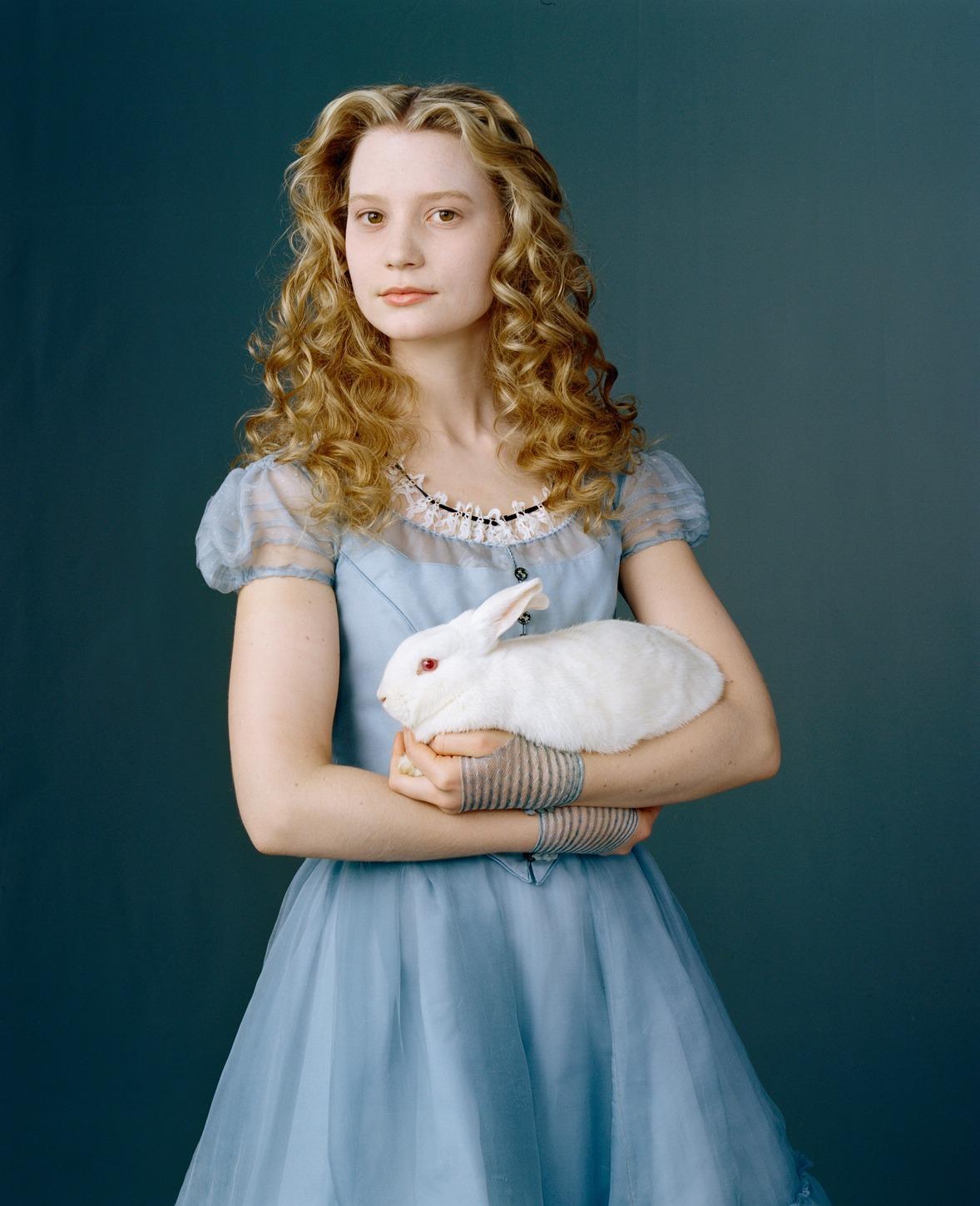
Mia Wasikowska has now played Alice in two movies for Walt Disney: “Alice in Wonderland” (2010) and “Alice Through the Looking Glass” (2016).
Alice is the lead character in two children’s novels by Lewis Carroll: “Alice’s Adventures in Wonderland” (1865) and its sequel, “Through the Looking-Glass” (1871). The two literary works are in the public domain, which allows anyone to produce their own adaptations without restriction or having to pay for usage rights.

Movies


May Clark, “Alice in Wonderland” (1903)
Gladys Hulette, “Alice’s Adventures in Wonderland” (1910)
Viola Savory, “Alice in Wonderland” (1915)
Ruth Gilbert, “Alice in Wonderland” (1931)
Charlotte Henry, “Alice in Wonderland” (1933)
Carol Marsh, “Alice in Wonderland” (1949)
Fiona Fullerton, “Alice’s Adventures in Wonderland” (1972)
Kristyna Kohoutova, “Alice” (1988)
Maggie Gwin, “Alice’s Misadventures in Wonderland” (2004)
Maggie Grace, “Malice in Wonderland” (2009)
Mia Wasikowska, “Alice in Wonderland” (2010) and “Alice Through the Looking Glass” (2016)


Television


Ursula Hanray, “Alice Through the Looking Glass” (BBC, 1937)
Vivian Pickles, “Alice In Wonderland” (BBC, 1946)
Iris Mann, “Ford Theatre: Alice In Wonderland” (CBS, 1950)
Robin Morgan, “Kraft Theatre: Alice in Wonderland” (ABC, 1954)
Gillian Barber, “Alice in Wonderland” (NBC, Hallmark Hall of Fame, 1955)
Jeannie Carson, “Alice Through the Looking Box” (1960)
Anne-Marie Malik, “Alice in Wonderland” (BBC, 1966)
Judi Rolin, “Alice Through the Looking Glass” (NBC, 1966)
Sarah Sutton, “Alice Through the Looking Glass” (BBC, 1973)
Meryl Streep, “Alice at the Palace” (NBC, 1982)
Annie Enneking, “Alice in Wonderland” (1982)
Jenny Agutter, “A Dream of Alice” (BBC, 1982)
Kate Burton, “Great Performances: Alice in Wonderland” (PBS, 1983)
Natalie Gregory, “Alice in Wonderland” (CBS, 1985)
Giselle Andrews, “Alice in Wonderland” (Anglia Television, 1985)
Kate Dorning, “Alice in Wonderland” (BBC, 1986)
Elisabeth Harnois, “Adventures in Wonderland” (1992-1995)
Kate Beckinsale, “Alice Through the Looking Glass” (Channel 4, 1998)
Tina Majorino, “Alice in Wonderland” (NBC, 1999)
Caterina Scorsone, “Alice” (Syfy, 2009)
Lauren Cuthbertson, “Alice’s Adventures in Wonderland” (BBC, 2011)
Sophie Lowe, “Once Upon a Time in Wonderland” (2013–14)


Porn movies


Kristine DeBell, “Alice in Wonderland: An X-Rated Musical Comedy” (1975)
Allysin Chaynes, “Wonderland” (2001)
Stacy Saran, “Alice: A Fairy Love Tale” (2010)
Sunny Lane, “Alice” (2010)
Sasha Grey, “Malice in Lalaland” (2010)
Lexi Belle, “Wonderland” (2013)

Photos: Mia Wasikowska (top), Carol Marsh, Maggie Grace, Kate Beckinsale, Meryl Streep, and Lexi Belle (second from left).

Saturday, February 13, 2016

Revisionist fairytale art, a retrospective

At Tech-media-tainment, I enjoy reviewing all the revisionist takes on public domain fairytales. That includes artwork, movies and TV shows.
What follows is a roundup of my articles on modern fairytale depictions since the last time I did one.

Disney princesses as Jedi knights, Zodiac signs and hot dogs (Feb. 13, 2016)

Sexy depictions of Belle from ‘Beauty and the Beast’ (Feb. 11, 2016)

13 actresses who have played Belle in Beauty and the Beast and 1 more who will (Feb. 10, 2016)

Disney princess parodies and mashups (Oct. 5, 2015)

Fap if you believe in fairies; Riley Steele latest actress to play Tinker Bell (Oct. 5, 2015)

Porn movies based on fairy tales

Sexy Sleeping Beauty artwork (Oct. 4, 2015)

Disney princesses as plus-sized ladies, ‘League of Legends’ characters and raptors (July 20, 2015)

Tattooed Little Mermaid art (July 19, 2015)

Sexy Little Mermaid, Ariel artwork (July 18, 2015)

6 actresses who have played Tinker Bell and 2 more who will (May 24, 2015)

Revisionist fairytale artwork in review (Dec. 9, 2014)

Revisionist fairytale art (July 29, 2013)

Photo: “Beauty and the Beast” illustration by Andrew Tarusov in the style of Tim Burton.

Sunday, March 15, 2015

‘Cinderella’ opening shows that Disney shouldn’t fear the public domain

For years, the Walt Disney Co. has fought to extend copyright terms to prevent Mickey Mouse from falling into the public domain. But the irony is that Disney got its start thanks to cartoon adaptations of fairy tales that had long been in the public domain.
Disney’s 2015 live-action feature film “Cinderella” opened Friday to positive reviews and stellar box office receipts. While the film has impeccable talent, led by director Kenneth Branagh, what likely sold it for audiences was the Disney brand name.
So if Mickey Mouse does fall into the public domain, there will still be Disney’s Mickey Mouse and everybody else’s versions. And as long as it continues to make a superior family product, Disney has nothing to worry about from its rivals.
After all, anybody can make a Cinderella movie because that fairytale has long been in the public domain. (Check out “16 strange, fascinating, lesser-known onscreen Cinderella stories.”) But the Disney name has cachet in the category.
Last year, Disney did a live-action Sleeping Beauty movie in “Maleficent.” Up next is a live-action retelling of “Beauty and the Beast.”

Photo: Disney’s “Cinderella” (2015)

Saturday, March 14, 2015

Sherlock Holmes and the case of the public domain

The general public and the arts benefit greatly from creative works in the public domain. Those works include books, music, movies and other art whose limited period of copyright protection has expired.
No one would argue that patented inventions should be owned in perpetuity by the inventors, their families or corporations.
Generic drugs and other low-cost products are made possible by inventions coming off patent protection. Plus, inventors have an incentive to create new, better products as the patents on older inventions expire.
But when it comes to literature, songs and other creative works, people are more tolerant of prolonged periods of protection. They don’t understand that society benefits greatly when works come off copyright protection.
Copyright protection was never meant to be a way to enrich descendants of creators or corporations for generations.
But here we are in an age when patents in the U.S. expire after 17 years, but copyrights can easily last for 100 years or more thanks to numerous extensions. Patents and copyrights used to be on equal footing.
U.S. copyright protection currently lasts for the life of the author plus an additional 70 years. For works created for hire (such as for a movie studio), the copyright endures for a term of 95 years from the year of its first publication.
Critics of the U.S. government say it serves the interests of corporate political campaign donors and their lobbyists more than the general public. No place is this clearer than with the entertainment industry, which has bought more influence than just about any other industry.
Every time Mickey Mouse approaches the end of copyright protection, the Walt Disney Co. returns to Capitol Hill and persuades lawmakers to extend the terms. Expect to see Disney’s lobbyists press Washington, D.C., soon for another extension as “Steamboat Willy” (1928), the first Mickey Mouse cartoon, is set to enter the public domain in 2023.
The bastardization of copyright and trademark laws can be seen all around us.
One recent example is the adult children of the late Marvin Gaye suing pop music artists Robin Thicke and Pharrell Williams for mimicking Gaye’s musical style on “Blurred Lines.”
Another is pop singer Taylor Swift trademarking such phrases as “This sick beat” and “Nice to meet you. How you been?” from her songs.
Bad copyright precedents include the family of Martin Luther King Jr. copyrighting the late civil rights leader’s “I Have a Dream” speech, so news organizations and others have to pay for its use even though it was a public speech, not a commercial performance.
Or how about the song “Happy Birthday To You,” which was first published in 1912? The copyright holders continue to collect fees for its use in movies, TV shows, radio and elsewhere when it arguably should be in the public domain.
Then there’s the case of Sherlock Holmes.
Even though the first Sherlock Holmes detective story was published in 1887, the estate of author Arthur Conan Doyle, continued to push for copyright protection. The Doyle estate exhausted its legal appeals in the U.S. in 2014 and Holmes is now definitively in the public domain, free for all to use.
Being in the public domain allows artists of all stripes to adapt the character and stories into new works without having to get permission or pay licensing fees. High schools can perform Sherlock Holmes plays, comic book artists can make Sherlock Holmes graphic novels, filmmakers can make Sherlock Holmes movies and TV shows.
Sherlock Holmes joins other public domain characters as Hercules, Snow White, Cinderella, Robin Hood, Dracula, Frankenstein, Tarzan, Pinocchio, the Wizard of Oz, Tom Sawyer and many more.
Being in the public domain provides increased exposure for works that have been locked up by copyright restrictions. Consider all the Sherlock Holmes adaptations in production.
The BBC has “Sherlock,” a TV series starring Benedict Cumberbatch and Martin Freeman. CBS has “Elementary” starring Jonny Lee Miller and Lucy Liu.
Warner Bros. is developing a third “Sherlock Holmes” movie starring Robert Downey Jr. as the famed detective. Paramount Pictures is doing “Young Sherlock Holmes,” which depicts Holmes and buddy Watson as teenagers.
A recent comic book by Karl Bollers and Rick Leonardi called “Watson and Holmes” reimagines Sherlock Holmes and John Watson as African Americans in New York City’s Harlem district.
Soon we’ll see Ian McKellan as an elderly Sherlock Holmes in the movie “Mr. Holmes,” directed by Bill Condon. It’s based on the book “A Slight Trick of the Mind” (2005).

Art: Infographic of Sherlock Holmes film and TV adaptations from the Blackmoods blog.

Related reading:

Years Of Brainwashing The Public Into Thinking Everything Creative Must Be 'Owned' Has Led To This New Mess (Techdirt; March 13, 2015)

Why you should care about the public domain (Tech-media-tainment; Feb. 22, 2012)

Wednesday, January 14, 2015

Visiting the Las Vegas welcome sign: What you should know

I’ve been to Las Vegas about 20 times, but not until this year did I visit the famous “Welcome to Fabulous Las Vegas Nevada” sign.
The iconic sign is located at the entrance to the Las Vegas Strip. It stands in the median at 5100 Las Vegas Boulevard South, Paradise, Nev. It’s a short walk from the Mandalay Bay Hotel and Casino, on the west side of McCarran Airport.
Erected in 1959, the sign is on the U.S. National Register of Historic Places. The design is featured on many Las Vegas souvenirs and is in the public domain, according to Wikipedia.
To get to the sign you have to cross a busy three-lane road without the benefit of a stop signal or crosswalk.
A small parking lot in the median provides 10 standard parking spaces, two handicapped spaces, and two large spaces for buses or limousines.

Clark County is building an additional parking lot to the south that will add 20 more parking spaces to accommodate growing visitor traffic.
For a rather small sign (25-feet tall), it sure does attract a lot of tourists.

On the Saturday afternoon I visited, there were quite a few people lined up to take photos in front of the sign, including some newlyweds. There was even an Elvis impersonator who would take photos with you for tips.

What you don’t see in photos of the famous sign are the throngs of people waiting to take photos, the traffic backed up at the small parking lot and the three large solar trees that power the sign. There are also a lot of unsightly power lines that will clutter your photos.