Showing posts with label microsoft. Show all posts
Saturday, September 19, 2026
AI summaries are destroying the news business
Generative artificial intelligence is pushing the news business to the breaking point. AI summaries from the likes of Google, Microsoft, OpenAI and others are diverting revenue from news publishers, leading to fewer click-throughs, less advertising revenue and fewer subscriptions.
Staffers at Microsoft and OpenAI knew that scraping news websites to train their AI models could damage or even destroy those publications, according to court documents in a high-profile copyright infringement lawsuit filed by the New York Times. (See articles below.)
An OpenAI executive referred to an “existential threat” to publishers and a Microsoft executive said AI content scraping had started a “doom loop” for the news business, according to reports this week.
From a consumer perspective, the AI summaries are enticing. They give users the answers they are looking for instead of weblinks to full articles to read. Also, many publications have pay walls that provide friction for the casual web surfer but that AI systems have managed to bypass.
AI model builders must coordinate with news publishers and compensate them for their work. Otherwise, they could end up killing the valuable sources of information that they rely on for their answer engines.
Related articles:
Tech Companies’ Staff Knew Their AI Tools Posed ‘Existential Threat’ to Publishers (The Wall Street Journal; Sept. 17, 2026)
Microsoft and OpenAI Workers Worry About ‘Largest Theft of Labor’ in History (The New York Times; Sept. 17, 2026)
OpenAI, Microsoft executives' quotes on AI training threaten copyright defense, news outlets argue (Reuters; Sept. 17, 2026)
Google rolls out pay-per-value AI licensing program to publishers (Digiday; Sept. 14, 2026)
Ziff Davis CEO: if OpenAI can find $750 billion for data centers, it can find money for publishers, too (Fortune; Sept. 14, 2026)
Photo: AI artwork produced with prompts on Google Gemini.
Sunday, April 28, 2024
The world’s longest right-turn lane
Road improvements near my home in Vienna, Virginia, added a ridiculously long right-turn lane. That got me asking the question: What’s the world’s longest right-turn lane? Or at least the longest in the United States.
After a Google search gave poor results, I decided this was a great question for AI chatbots to answer. After all, these artificial intelligence tools are supposed to be able to scour massive databases to come up with simple answers to queries.
The right-turn lane from eastbound Leesburg Pike between Baron Cameron Avenue and Delta Glen Court in Reston and Vienna, Va., is 0.6 miles long, according to Google Maps.
To find the world’s longest right-turn lane, I first tried Microsoft Bing Copilot, which uses OpenAI’s ChatGPT.
Unfortunately my queries produced conflicting answers from Bing Copilot.
“The title of the world’s longest right turn lane goes to Interstate 285 (I-285) in Atlanta, Georgia, USA. Specifically, it’s the right turn lane from westbound I-285 onto northbound Interstate 75 (I-75),” Bing Copilot said. “This seemingly endless right turn lane stretches for an impressive 2.4 miles (3.9 kilometers)!”
That doesn’t sound like a turn lane. It’s more like a highway lane that just ends and tells drivers to merge left or take the exit. That could make the turn-lane distinction hard to quantify.
However, in a follow-up query, Bing Copilot had a different answer for the same location.
“The right turn lane from westbound Interstate 285 (I-285) onto northbound Interstate 75 (I-75) in Atlanta, Georgia, USA, is approximately 0.8 miles (1.3 kilometers) in length. This lengthy turn lane was part of the I-285/Peachtree Boulevard Interchange Improvements project. The project aimed to enhance traffic flow, reduce bottlenecks, and improve operational efficiency for drivers making this critical right turn,” Bing Copilot said.
So it’s either 0.8 miles or 2.4 miles long. Come on, Microsoft, choose a lane!
Next, I went to Microsoft’s source, ChatGPT. But it gave a wordy nonanswer:
Determining the absolute longest right turn lane in the world would be challenging, as it would require detailed research and measurement of various roadways worldwide. However, some cities, particularly those with extensive road networks and high traffic volume, may have exceptionally long right turn lanes.Then, I asked Google Bard to tell me the world’s longest right-turn lane. It said lack of records on the subject would make it difficult to get a correct answer.
For example, cities like Los Angeles, California, or Houston, Texas, known for their sprawling urban landscapes and extensive highway systems, might have notably long right turn lanes in certain locations. However, without specific data or studies on the exact length of each right turn lane globally, it's difficult to definitively identify the single longest one.
In such cases, road authorities or transportation departments in respective regions might have records or data on the longest right turn lanes within their jurisdictions.
“That being said, there are discussions online about a long right turn lane near Ikea in Taastrup, Denmark, clocking in at around 900 meters (3,000 feet),” Bard said. That turn lane is about 0.57 miles long.
Bard said its source was a Reddit discussion thread titled “My town has an extremely long turn lane” on r/mildlyinteresting.
I then asked Bard for the longest right-turn lane in the U.S., but it didn’t have an answer.
Finally, I asked AI Chat from DeepAI to tell me the longest right-turn lane in the U.S.
“The longest right turn lane in the United States is located in Houston, Texas. It is approximately 2.6 miles long and stretches along the West Loop Southbound (Interstate 610) exit to Woodway Drive,” AI Chat said.
AI Chat said it got the information from a Houston Chronicle article titled “Houston’s longest right turn lane gets a facelift.”
So, there you have it, no definitive answer on the longest right-hand turn lane. Thanks for nothing, AI.
Photo: Google map of Leesburg Pike in Vienna, Va.
Saturday, January 27, 2024
CES 2024 news in review: AI, spatial computing, robots and more
The following is a roundup of my coverage of the CES 2024 technology trade show in Las Vegas.
Arm elbows into new arenas as chip designer takes on AI, auto, cloud, other markets. (Jan. 26, 2024)
Powerfoyle becoming “Intel Inside” for light-powered gadgets. (Jan. 19, 2024)
Robot barista looks to fill labor shortage. Say hello to Adam. (Jan. 19, 2024)
Apple isn’t the only player in spatial computing. Rivals populated CES 2024. (Jan. 17, 2024)
Garmin targeting niche markets in smartwatches for women, kids. (Jan. 12, 2024)
Dolby cranks up volume of licensing deals in autos, TVs, PCs. (Jan. 12, 2024)
Qualcomm in catbird seat for edge AI shift, CEO says. (Jan. 11, 2024)
Smart TV platform battle rages at CES 2024. Amazon, Roku make waves. (Jan. 11, 2024)
Automotive chipmakers squeezed by “accordion effect.” (Jan. 10, 2024)
L’Oreal adds glamour to CES 2024 with beauty tech gadgets. (Jan. 9, 2024)
Dell, HP join Intel push for AI PCs. Microsoft Copilot called “marquee” feature. (Jan. 9, 2024)
Nvidia steps up generative AI game with new chips. (Jan. 8, 2024)
AMD rounds out AI PC chip lineup with new desktop processors. (Jan. 8, 2024)
Consumers set to upgrade pandemic-era tech purchases. (Jan. 8, 2024)
“AI is the story of the show”: What to expect from CES 2024. (Jan. 6, 2024)
Photos: CES 2024 outside the West Hall of the Las Vegas Convention Center (Patrick Seitz); LG Electronics WebOS tunnel at CES 2024 (LG)
Labels:
amazon.com,
apple,
CES,
consumer electronics,
dell,
dolby,
garmin,
hp,
intel,
las vegas,
microsoft,
personal computers,
qualcomm,
robots,
roku
Friday, January 19, 2024
CES 2024: The most talked-out companies and products at the massive tech show
CES 2024 unleashed a tsunami of exciting new products and technologies across a diverse range of industries and markets. For a general interest journalist, such as me, it was pretty overwhelming.
This week, the Social Media Analytics Platform of GlobalData provided a list of the most-mentioned companies and products showcased at the consumer electronics show, which ran Jan. 9-12 in Las Vegas. GlobalData is a leading data and analytics company.
Samsung ranked first on social media (both the X platform and Reddit) during CES 2024, based on the volume of discussions about its products at the show. Those products included its S95D OLED TV, folding-screen smartphones and transparent micro-LED TV displays.
Other top-mentioned companies at CES 2024 included Rabbit, Nvidia, LG, Sony, Intel, Microsoft, Qualcomm, Honda Motor and Walmart.
Artificial intelligence device startup Rabbit was the biggest surprise. The Santa Monica, Calif.-based company introduced a pocket-sized consumer AI gadget at CES 2024.
The Rabbit R1 is a walkie-talkie-like device with a built-in camera. It offers smartphone-free solutions to simplify tasks like booking a flight, getting an Uber or ordering a meal.
GlobalData said its analysis is based on online discussions from Jan. 7 through Jan. 15.
Photo: Word cloud showing the most talked-about subjects at CES 2024. (GlobalData)
Friday, June 10, 2022
FANG stocks defanged by Meta Platforms ticker change
With Facebook parent Meta Platforms changing its ticker to META from FB on Thursday, the FANG group of top internet stocks loses more relevance. Will talk of FANG stocks wither after the change? Will a new stock group emerge to define the next growth era?
CNBC’s “Mad Money” host Jim Cramer coined the term FANG stocks in 2013 to refer to the group of leading internet companies: Facebook, Amazon, Netflix and Google.
The FANG stocks group persisted after Google was placed under umbrella organization Alphabet in 2015. But Alphabet retained its GOOG and GOOGL tickers, allowing the acronym to continue.
Certainly, many Wall Street analysts and investors will continue to use the FANG acronym despite the change. The same is true for its many variants: FAANG (which adds Apple to the mix), FATMAN or FAATMAN (Facebook, Amazon, Apple, Tesla, Microsoft, Alphabet and Netflix), FANMAG (Facebook, Amazon, Netflix, Microsoft, Apple and Google). There’s also FANGMAN (which adds Nvidia).
Cramer suggested MAMAA (Meta, Apple, Microsoft, Amazon and Alphabet) as a replacement, though others have stylized it as AMAMA.
Others have played around with acronyms with the companies Apple, Amazon, Alphabet (or Google), Meta, Microsoft, Netflix and Tesla. They’ve come up with GAMMA, MANGA, MAGMA, MANTA and A MANTA.
China’s version of FANG stocks is the BAT stocks. BAT includes internet companies Baidu, Alibaba and Tencent. There’s also BAIT, which adds iQiyi.
With FANG stocks defanged by Facebook and Google name changes, what stock group will define the next growth era?
In March, BofA Securities analyst Vivek Arya created a grouping of top semiconductor stocks under the acronym MANGO. The MANGO stocks include Marvell Technology (MRVL), Advanced Micro Devices (AMD), Analog Devices (ADI), Broadcom (AVGO), Nvidia (NVDA), GlobalFoundries (GFS) and Onsemi (ON). Arya combined the three tickers that start with A as one letter in the acronym. It looks better than MAAANGO.
Saturday, November 13, 2021
Metaverse: Is there a porn app for that?
Whenever a new technology emerges, someone always comes up with a sex application for it.
From video cassette recorders to the internet, the adult entertainment industry has quickly found porn and sex applications for new technologies. More recently, that has included virtual reality, artificial intelligence, robotics, and cryptocurrency.
Lately the biggest buzzword in the technology industry has been the metaverse, with its promise of immersive virtual worlds. Companies like Meta Platforms, formerly Facebook, and Microsoft are pouring billions into developing the metaverse.
Adult entertainment companies are already touting their plays on the emerging metaverse.
Several companies are selling digital porn as NFTs (non-fungible tokens). The NFTs are collectibles now but could be integrated into the metaverse at some point.
On Nov. 8, Pokmi announced a “unique 3D Metaverse” NFT, minted in the likeness of brand ambassador Maitland Ward.
The new NFT will not be playable in-game or in the metaverse, but it points to the direction the industry is heading. (See article by Xbiz.)
Previous articles:
Is there a porn app for that? (Jan. 30, 2016)
Blockchain: Is there a porn app for that? (Jan. 20, 2018)
Augmented reality: Is there a porn app for that? (July 30, 2018)
Artificial intelligence in sex technology (Nov. 11, 2018)
Autonomous vehicles as mobile brothels (Nov. 18, 2018)
Photo: 3D metaverse NFT in the likeness of porn star Maitland Ward. (Pokmi)
Saturday, June 19, 2021
The reopening of the economy can’t come soon enough for E3
The E3 video game conference, also known as the Electronic Entertainment Expo, returned from a one-year absence this week with a virtual conference. Organizers canceled last year’s in-person E3 in Los Angeles because of the Covid-19 pandemic and took this year’s show online because of the continuing health crisis.
Judging from reactions to this year’s digital E3, the conference sorely needs a physical show to build excitement for the video game industry. Attendees said this year’s show was a boring, nonevent.
This year’s E3 was missing some major companies, including Activision Blizzard. Electronic Arts and Sony. And Take-Two Interactive Software only hosted a panel discussion on diversity and inclusion, instead of discussing new games. Other companies holding events during the show didn’t make any major announcements.
“The Electronic Entertainment Expo (E3) has become less relevant in recent years, and the irrelevancy has accelerated with the pandemic,” BMO Capital Markets analyst Gerrick Johnson said in a June 15 report.
Johnson said E3 2021 didn’t reflect the vibrancy of the industry today.
“While there were fewer new game introductions owing to lower E3 participation rates, the industry still looks to be publishing a bumper crop of next-gen AAA titles in 2021 and 2022,” he said.
Some of the most anticipated new games were teased with new trailers at E3 2021. They included Microsoft’s “Halo Infinite,” set for release later this year, and Nintendo’s “The Legend of Zelda: Breath of the Wild 2,” due out in 2022.
Meanwhile, the show’s organizer, the Entertainment Software Association, plans to return to Los Angeles for an in-person event for E3 2022. But ESA doesn’t have the dates confirmed yet.
Related reading:
For years, E3 has been gaming’s biggest event. Is that still true? (Washington Post; June 18, 2021)
E3 2021’s lack of AAA reveals let indie games take the spotlight (TechRadar; June 17, 2021)
The games industry has changed; E3 needs to do the same if it is to remain relevant (Midia Research; June 21, 2021)
Photo: E3 2021 art (Entertainment Software Association)
Saturday, January 16, 2021
CES 2021 news in review: AMD, Best Buy, Deere, Intel, Microsoft make waves
The following is a roundup of my coverage of the virtual CES 2021 technology trade show.
Caterpillar, Deere flaunt robotic vehicles for mining, farming at CES 2021. (Jan. 14, 2021)
Microsoft sounds alarm about state-sponsored cybersecurity threats. (Jan. 13, 2021)
Electronics retailer Best Buy thrives thanks to hybrid business model. (Jan. 12, 2021)
Chipmaker AMD expects to be in 50% more notebook PC models in 2021. (Jan. 12, 2021)
Intel unleashes flurry of new processors at CES 2021, hopes to change narrative. (Jan. 12, 2021)
8K TVs, see-through displays, home robots debut at CES 2021. (Jan. 11, 2021)
CES 2021: As massive tech show shrinks to a PC screen, will its impact wane? (Jan. 7, 2021)
Photo: The John Deere X-Series combine harvester earned a CES 2021 Innovation Award in the robotics category. Last year, the company’s John Deere 8RX tractor won a CES 2020 Innovation Award. (Deere)
Thursday, December 31, 2020
2021 tech industry predictions: Pent-up horniness boosts dating apps, big M&A deals forecast
Tech pundits had many of their predictions for 2020 thrown out the window because of the Covid-19 pandemic. The health crisis was a black swan event that made their forecasts mostly irrelevant.
Now that vaccines are reaching the market, governments might finally get the Covid-19 pandemic under control in the new year.
So, what are prognosticators seeing for 2021?
What follows is a sampling of predictions that will be proven right or wrong in the year ahead.
Dating apps have big moment post-pandemic
Readers of the Verge offered their predictions for the consumer internet and social networks in 2020.
Some people forecast a surge in usage of dating apps as the world opens following Covid-19 vaccinations.
“Many of you predict that when the Covid-19 vaccines have been widely distributed, the Earth will experience a period of prolonged horniness unlike anything that has been seen in generations,” Casey Newton wrote. “Tinder, Grindr, and all the rest are poised to thrive as a result.”
2021 IPOs: WordPress, TikTok, ‘Pokemon Go’ parents
2020 was a big year for initial public offerings. IPOs this year included Airbnb, DoorDash, Palantir Technologies, Snowflake, Unity Software and Warner Music Group.
Potential IPO candidates for 2021 include Didi, the “Uber of China”; ByteDance, owner of social media network TikTok; and Chinese drone maker DJI Innovations, MKM Partners said in a report. Others include Automattic, WordPress operator, website developer and e-commerce enabler; Niantic, the mobile video game developer known for “Pokemon Go”; and Roblox, online game platform and game creation system, MKM said.
Kiplinger included Roblox on its “13 Hot Upcoming IPOs to Watch For in 2021.” The list also features female-focused online dating service Bumble, pet supplies retailer Petco, game developers platform AppLovin, and stock-trading service Robinhood.
Microsoft, Cisco, Oracle make big acquisitions
The Information predicted several major tech acquisitions in 2021.
Writers Nick Wingfield and Kevin McLaughlin predicted that Microsoft will buy MongoDB. They said the acquisition would give Microsoft a way to beef up its online database offerings to better compete with Amazon Web Services.
They predicted Cisco will buy Smartsheet to make a move into the collaboration software category.
They also think Oracle will make a bid for Dropbox or Box, both file-sharing services, in the year ahead.
Elsewhere, Wedbush Securities analyst Daniel Ives said he thinks Microsoft will “make a major software acquisition” to expand its product footprint in the cloud computing war against Amazon.com.
U.S. tech firm buys Nokia
Research firm CCS Insight made several interesting predictions for the year ahead.
For one, it expects the Covid-19 pandemic to quicken the adoption of robots and automation beyond manufacturing and logistics.
CCS Insight also predicted that “a major U.S. tech company buys Nokia in 2021.” It said Microsoft is one potential suitor, according to Nokiamob.net.
Apple acquires a movie studio
Wedbush’s Ives predicts that Apple will buy a movie studio to bulk up the content on its Apple TV+ video streaming service. He included the 2021 prediction as part of his “Christmas wish list” for Apple. News reports say Apple recently passed on a deal to buy MGM.
“Apple finally rips the Band-Aid off and makes a major studio acquisition to change the course of its content efforts around Apple TV+ and its aggressive streaming ambitions,” Ives said. “We believe Sony Pictures, Lionsgate, and A24 remain the top candidates if (Apple CEO Tim) Cook & Co. go down that path.”
Evolutionary year ahead for augmented reality
ABI Research predicts that 2021 will be a “boon year” for the augmented reality market.
The enterprise market will continue to drive the AR market with remote expertise and remote training applications, ABI said.
The consumer AR market will grow thanks to smartphone and tablet software applications. But the predicted AR smart glasses market is still just getting started.
“2021 will be an important one for AR consumer hardware,” said Eric Abbruzzese, AR/VR research director at ABI Research. “nReal will ship its first headsets to consumers, while Mad Gaze will also look to expand. Also, Facebook is expected to roll out its AR smart glasses out of its Reality Labs initiative; Google may join as well after the acquisition of North, and with pressure from Facebook and others. Although expectations for a dedicated AR product launch are targeting 2022 for the company, Apple is a wild card.”
Mike Boland, an analyst with ARtillery Intelligence, says spatial computing has “transitioned to an adolescent period of its lifecycle.”
Consumer AR glasses will make progress in 2021, but they will be evolutionary, not revolutionary, developments, he said. The focus of AR glasses remains on the enterprise market, which doesn’t mind pricey, bulky hardware as long as it improves productivity and efficiency.
Boland expects Apple to announce its rumored smart glasses in 2022.
Photo: Dating apps illustration by Norma Dorothy via Creative Commons.
Wednesday, December 16, 2020
Will CES 2021 tech show be for couch potatoes?
I plan to attend the CES 2021 virtual trade show next month from my office PC for a “lean-in” experience. But it sounds like the organizers also are developing a “lean-back” experience, like watching a TV show about CES from your couch.
This is the first virtual show for CES, which was forced to cancel its annual in-person show in Las Vegas because of the Covid-19 pandemic.
On Tuesday, the Consumer Technology Association, which owns and runs CES, held a press briefing to provide more details on the virtual show, which is scheduled for Jan. 11-14.
The trade group expects more than 1,000 companies to participate in the online conference and exhibition. At the physical CES 2020, more than 4,400 companies exhibited.
The Consumer Technology Association made “a major investment in the seven figures” to build the digital platform for CES 2021, Chief Executive Gary Shapiro said. The online venue, developed with technology partner Microsoft, will allow for collaboration, engagement and connections, he said. That means discovering interesting companies, scheduling online visits with exhibitors, putting together meetings with attendees and other forms of interaction.
CES 2021 will feature more than 100 hours of programming for online attendees, including press conferences, keynote speeches and panel discussions.
The reimagined CES will center around a broadcast anchor booth. It will be staffed by Justine Ezarik, the tech and video game personality behind iJustine; Rich DeMuro, tech reporter for KTLA 5 news in Los Angeles; Naomi Kyle, actress, host and producer; and Brian Tong, tech host and content creator.
“The all-digital CES will be a true broadcast experience,” said Jean Foster, senior vice president of marketing and communications for CTA. “We’re going to be bringing in business leaders and industry experts directly to you in your home or in your office.”
The anchors will broadcast live during the show. They will discuss product announcements, trends and news at CES as well as conduct interviews.
“When you log on to the CES digital venue, you’re going to see the anchor desk,” Foster said. “We will cover what’s coming up in the day ahead. We’ll recap some of the major announcements that have taken place, any product launches, any news. We’re going to have interviews and discussions on critical tech issues. And of course, we’re going to bring you analysis and highlights from our CES keynotes.”
Exhibitors for CES 2021 include tech firms such as Canon, Hisense, Intel, Lenovo, LG Electronics, Panasonic, Philips, Sony, Samsung Electronics, TCL and Voxx. Non-traditional exhibitors at the show will include Bridgestone, Caterpillar, Indy Autonomous Challenge, John Deere, L’Oréal and Procter & Gamble.
The Consumer Technology Association is planning a hybrid show for CES 2022. There will be a physical show in Las Vegas with a major online component, Shapiro said.
Saturday, August 1, 2020
What will a virtual CES 2021 be like?
On July 28, the Consumer Technology Association canceled its in-person CES 2021 conference scheduled for Jan. 6-9 in Las Vegas. The writing was on the wall. The world, especially the U.S., has not gotten the Covid-19 pandemic under control. The pandemic is likely to rage into next year and possibly until there’s a vaccine.
CES 2021 will be an “all-digital experience,” the Consumer Technology Association said in a news release. What that means exactly is still to be spelled out.
While the organization is planning CES 2021, they can look to other physical events that went online for lessons learned.
For instance, the virtual San Diego Comic-Com was called “a bust” by Variety.
The main reason was a lack of fan interaction with TV show and movie creators, the entertainment publication said. Another problem was that news was released outside of the Comic-Con@Home events, muting their impact. Variety said Comic-Con@Home also was a dud in terms of social media buzz.
On the other hand, Apple’s virtual Worldwide Developers Conference was deemed a success.
“Though we could not be together in person, Apple set a new standard for what online events can achieve with our celebrated all virtual event,” Apple Chief Executive Tim Cook told analysts on July 30. “The results here speak for themselves. More than 22 million viewers tuned in across all of Apple streams. For our developers, we distributed more than 72 hours of video content. That’s three full days of video. The week saw more than 200 direct video engineering and design sessions and about 4,500 person-to-person appointments with developers across 227 virtual labs.”
Pre-show press conferences by tech companies easily can be switched to online events. Many already were streamed online.
Keynote speeches and presentations by tech leaders also can be moved to streaming video.
I hope CES organizers aim high when picking big names for the keynotes to generate news and interest. The virtual CES 2021 offers the possibility to attract public figures who would not have given an in-person keynote at the physical show.
Here are some suggestions for CES 2021 keynotes:
My biggest question is how the average CES exhibitor will handle the all-digital conference. I would imagine that each will do a video to post in a directory of virtual exhibitors. These videos will include a rundown of their latest products. Some could even do online question-and-answer sessions. This might work best for company’s selected as CES Innovation Award winners and the like.
CES describes this part of the all-digital show as its “product showcase.”
“With this digital evolution of the CES show floor, you’ll be able to explore products and services, based on your interests and business, through dynamic product showcases or live demos,” the Consumer Technology Association said.
The trade group also promised virtual meetings and networking opportunities with CES 2021.
The great thing about CES is that it sets the tone for the tech industry for the year ahead. As such, it focuses on tech solutions for the world’s problems. I’m hopeful that CES 2021 will be no different.
Photo: CES 2020 at the Las Vegas Convention Center. (Consumer Technology Association)
CES 2021 will be an “all-digital experience,” the Consumer Technology Association said in a news release. What that means exactly is still to be spelled out.
While the organization is planning CES 2021, they can look to other physical events that went online for lessons learned.
For instance, the virtual San Diego Comic-Com was called “a bust” by Variety.
The main reason was a lack of fan interaction with TV show and movie creators, the entertainment publication said. Another problem was that news was released outside of the Comic-Con@Home events, muting their impact. Variety said Comic-Con@Home also was a dud in terms of social media buzz.
On the other hand, Apple’s virtual Worldwide Developers Conference was deemed a success.
“Though we could not be together in person, Apple set a new standard for what online events can achieve with our celebrated all virtual event,” Apple Chief Executive Tim Cook told analysts on July 30. “The results here speak for themselves. More than 22 million viewers tuned in across all of Apple streams. For our developers, we distributed more than 72 hours of video content. That’s three full days of video. The week saw more than 200 direct video engineering and design sessions and about 4,500 person-to-person appointments with developers across 227 virtual labs.”
So, the key learnings from those virtual events include having live interactive events and breaking news.
The Consumer Technology Association has a little over five months to pull together its all-digital CES 2021.
“The new format will allow participants to hear from technology innovators, see cutting-edge technologies and the latest product launches, and engage with global brands and startups from around the world,” the trade group said. “CES 2021 will be a new immersive experience, where attendees will have a front-row seat to discover and see the latest technology. This highly personalized experience will bring a global event to the comfort and safety of your home or office.”In a LinkedIn post, Gary Shapiro, chief executive of the Consumer Technology Association, pledged to return to Las Vegas with a physical show for CES 2022.
As a member of the news media, I will miss seeing the latest big-screen TVs and other gadgets in person. But many aspects of the show can be handled virtually.Pre-show press conferences by tech companies easily can be switched to online events. Many already were streamed online.
Keynote speeches and presentations by tech leaders also can be moved to streaming video.
I hope CES organizers aim high when picking big names for the keynotes to generate news and interest. The virtual CES 2021 offers the possibility to attract public figures who would not have given an in-person keynote at the physical show.
Here are some suggestions for CES 2021 keynotes:
- Philanthropist Bill Gates could discuss efforts to combat the Covid-19 pandemic and how the world will change after the threat has passed. When he led Microsoft, Gates has a fixture at CES. He gave his 12th and final CES keynote on Jan. 6, 2008.
- Apple CEO Tim Cook could make his first CES keynote. Apple has snubbed CES in favor of holding its own company events. But these are unprecedented times, right? CES could give Cook the forum to discuss whatever he wants: green initiatives, education, his vision for the smart home, etc.
- Facebook CEO Mark Zuckerberg could hold a keynote in virtual reality. He’s a big proponent of the technology with the company’s Oculus VR business. The event could be streamed both to VR headsets and in surround video on YouTube. It is the absolute perfect time for a virtual reality keynote with everyone stuck at home.
My biggest question is how the average CES exhibitor will handle the all-digital conference. I would imagine that each will do a video to post in a directory of virtual exhibitors. These videos will include a rundown of their latest products. Some could even do online question-and-answer sessions. This might work best for company’s selected as CES Innovation Award winners and the like.
CES describes this part of the all-digital show as its “product showcase.”
“With this digital evolution of the CES show floor, you’ll be able to explore products and services, based on your interests and business, through dynamic product showcases or live demos,” the Consumer Technology Association said.
The trade group also promised virtual meetings and networking opportunities with CES 2021.
The great thing about CES is that it sets the tone for the tech industry for the year ahead. As such, it focuses on tech solutions for the world’s problems. I’m hopeful that CES 2021 will be no different.
Photo: CES 2020 at the Las Vegas Convention Center. (Consumer Technology Association)
Saturday, May 23, 2020
CES 2021: Will it happen? And if so, how different will it be?
2020 will be remembered as the year we stayed at home, sheltering in place from the Covid-19 pandemic.
Millions of people have shifted to working from home and distance learning. Meanwhile, movie theaters, sports and concert venues, and other establishments have been closed to stop the spread of the disease. Restaurants and retail businesses have either shut down or transitioned to takeout and curbside delivery.
The year started off promisingly for me. I traveled to the annual CES consumer electronics show in Las Vegas as one of more than 170,000 attendees. At the time, the as-yet-unnamed novel coronavirus was believed isolated where it began in China in December 2019.
CES 2020 ran Jan. 7-10, with preshow events beginning on Jan. 5. The World Health Organization declared the disease a “public health emergency of international concern” on Jan. 30 and a global pandemic on March 11.
Some media reports have speculated that CES 2020 could have been catalyst in helping to spread Covid-19 throughout the U.S. (See article by Mashable.)
“We will showcase our exhibitors’ products, technology breakthroughs and ideas to the world, both physically in Las Vegas and digitally,” it said. Organizers plan to expand the show’s digital reach by offering more livestreamed CES content and other virtual opportunities.
Those attending CES 2021 can expect changes to increase their safety. Those changes include asking attendees and exhibitors to wear face masks and avoiding shaking hands.
CES will provide “sanitization stations throughout,” which I assume means more hand-sanitizer dispensers. Show venues will be regularly cleaned and sanitized, especially product demonstration areas.
CES 2021 also will promote social distancing of attendees. This will include widening aisles in many exhibit areas and providing more space between seats in conference programs.
The conference also might implement “contactless thermal scans at key venue entry points.”
This is the current thinking of CES organizers, but a lot could change in the months ahead.
I have no doubt that the Consumer Technology Association is committed to holding CES 2021, even if it must be scaled back because some exhibitors and participants will be afraid to attend.
The trade group faced similar fears when it held CES 2002, just four months after the 9/11 terrorist attacks. It responded to those concerns with an increased security presence and bag checks and body scans at venues.
But companies are proceeding cautiously in the Covid-19 age. Many have canceled in-person events and business travel for the rest of the year.
Microsoft plans to make all its internal and external events digital-only until July 2021 due to the ongoing coronavirus pandemic.
Likewise, Facebook canceled all planned physical events with 50 or more attendees until June 2021.
Creative Strategies analyst Tim Bajarin said in a Forbes column that companies planning to exhibit at CES 2021 need backup plans.
“The vendors who would be showing at CES 2021 need to start thinking of an alternative means to getting their marketing and product announcements out at the first of the year, in case a traditional CES does not take place,” he wrote.
The prevailing wisdom is that things won’t get back to normal until there’s a vaccine for Covid-19. That’s not likely to happen until mid- to late 2021 at the earliest and even then, supplies will be limited.
Las Vegas casinos have been closed for two months now because of the Covid-19 pandemic. Their tentative reopen date is June 4, with restrictions, according to the Las Vegas Review-Journal and Vox Media.
After a year of cancellations, it would be nice to see a return to some semblance of normalcy in 2021. That could start with CES 2021, which is an uplifting event that shows the promise of technology to improve our lives.
You can be sure that CES 2021 will highlight technologies that can provide solutions for day-to-day challenges created by the pandemic. It also could offer a look at how the technology industry is assisting medical fields in battling infectious diseases like Covid-19.
CES 2021 was scheduled to be the debut event for the expanded Las Vegas Convention Center. The LVCC expansion will include an underground transportation system built by Elon Musk’s Boring Company.
Millions of people have shifted to working from home and distance learning. Meanwhile, movie theaters, sports and concert venues, and other establishments have been closed to stop the spread of the disease. Restaurants and retail businesses have either shut down or transitioned to takeout and curbside delivery.
The year started off promisingly for me. I traveled to the annual CES consumer electronics show in Las Vegas as one of more than 170,000 attendees. At the time, the as-yet-unnamed novel coronavirus was believed isolated where it began in China in December 2019.
CES 2020 ran Jan. 7-10, with preshow events beginning on Jan. 5. The World Health Organization declared the disease a “public health emergency of international concern” on Jan. 30 and a global pandemic on March 11.
Some media reports have speculated that CES 2020 could have been catalyst in helping to spread Covid-19 throughout the U.S. (See article by Mashable.)
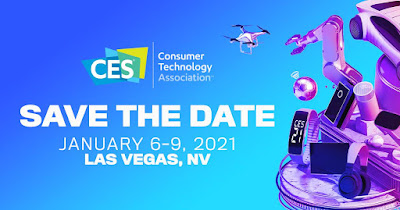
The Consumer Technology Association, which runs the show, says planning for CES 2021 is underway, according to a May 7 post. The show is scheduled for Jan. 6-9, 2021, in Las Vegas.
On its website, the trade group says “major brands are committed for the show.”“We will showcase our exhibitors’ products, technology breakthroughs and ideas to the world, both physically in Las Vegas and digitally,” it said. Organizers plan to expand the show’s digital reach by offering more livestreamed CES content and other virtual opportunities.
Those attending CES 2021 can expect changes to increase their safety. Those changes include asking attendees and exhibitors to wear face masks and avoiding shaking hands.
CES will provide “sanitization stations throughout,” which I assume means more hand-sanitizer dispensers. Show venues will be regularly cleaned and sanitized, especially product demonstration areas.
CES 2021 also will promote social distancing of attendees. This will include widening aisles in many exhibit areas and providing more space between seats in conference programs.
The conference also might implement “contactless thermal scans at key venue entry points.”
This is the current thinking of CES organizers, but a lot could change in the months ahead.
I have no doubt that the Consumer Technology Association is committed to holding CES 2021, even if it must be scaled back because some exhibitors and participants will be afraid to attend.
The trade group faced similar fears when it held CES 2002, just four months after the 9/11 terrorist attacks. It responded to those concerns with an increased security presence and bag checks and body scans at venues.
But companies are proceeding cautiously in the Covid-19 age. Many have canceled in-person events and business travel for the rest of the year.
Microsoft plans to make all its internal and external events digital-only until July 2021 due to the ongoing coronavirus pandemic.
Likewise, Facebook canceled all planned physical events with 50 or more attendees until June 2021.
Creative Strategies analyst Tim Bajarin said in a Forbes column that companies planning to exhibit at CES 2021 need backup plans.
“The vendors who would be showing at CES 2021 need to start thinking of an alternative means to getting their marketing and product announcements out at the first of the year, in case a traditional CES does not take place,” he wrote.
The prevailing wisdom is that things won’t get back to normal until there’s a vaccine for Covid-19. That’s not likely to happen until mid- to late 2021 at the earliest and even then, supplies will be limited.
Las Vegas casinos have been closed for two months now because of the Covid-19 pandemic. Their tentative reopen date is June 4, with restrictions, according to the Las Vegas Review-Journal and Vox Media.
After a year of cancellations, it would be nice to see a return to some semblance of normalcy in 2021. That could start with CES 2021, which is an uplifting event that shows the promise of technology to improve our lives.
You can be sure that CES 2021 will highlight technologies that can provide solutions for day-to-day challenges created by the pandemic. It also could offer a look at how the technology industry is assisting medical fields in battling infectious diseases like Covid-19.
CES 2021 was scheduled to be the debut event for the expanded Las Vegas Convention Center. The LVCC expansion will include an underground transportation system built by Elon Musk’s Boring Company.
Sunday, January 28, 2018
Final predictions for 2018: Wedding bells for Taylor Swift, curtains for President Trump
In late December, I published a list of bold predictions for 2018 from numerous sources. After that post, many other pundits made their predictions.
What follows is a roundup of some of their most interesting predictions.
Engagement for Taylor Swift, divorce for Will Smith
Nicola Byrne, a writer for the Daily Edge, predicted that singer Taylor Swift will get engaged to boyfriend Joe Alwyn in 2018, while actors Will Smith and Jada Pinkett Smith will split.
Internet media acquisitions
Twitter, Snap, BuzzFeed and Pinterest are acquired (or valued in subsequent financing rounds) at 25% to 50% of their market highs, Scott Galloway, a professor of marketing at the New York University Stern School of Business, said in a post on Seeking Alpha. All four will continue to underwhelm at the hands of the Facebook and Google advertising market duopoly, he said.
Twitter will be acquired
BTIG analyst Richard Greenfield predicted that Twitter will be acquired in 2018.
“Twitter offers a unique acquisition opportunity for any company looking to own breaking news, politics and sports, infused with video on mobile devices with tens of millions of daily active users across the world,” Greenfield said in a blog post. “Add to that a vast treasure trove of data on its users and a Twitter acquisition becomes compelling for many companies … Twitter also gives a buyer a home screen-worthy mobile app that has eluded essentially everyone not named Google, Facebook, Apple and Snapchat.”
2018 Time Person of the Year: Robert Mueller
Galloway predicts that President Donald Trump will vacate the White House in 2018 (possibly for health reasons) and Vice President Mike Pence will be sworn in as the 46th U.S. president. Galloway offered no explanation for Mueller’s selection as Time’s Person of the Year. Mueller is heading up the investigation into Russia’s possible interference in the 2016 election.
Amazon will acquire Target
Loup Ventures predicted that e-commerce leader Amazon.com will buy discount retailer Target in 2018.
“Amazon believes the future of retail is a mix of mostly online and some offline. Target is the ideal offline partner for Amazon for two reasons: shared demographic and manageable but comprehensive store count,” the venture capital firm said in a blog post.
Netflix buys a studio
To ramp up its original content production, internet television leader Netflix might buy a studio this year, Variety magazine predicted.
“One potential takeover target: MGM, which oversees a large library of movies and TV shows, with James Bond, ‘Stargate,’ ‘Rocky’ and ‘RoboCop’ among its franchises,” Variety said.
Microsoft makes big security acquisition
The Information predicted that Microsoft will make a “major, multibillion-dollar security acquisition” in 2018 and named FireEye as a potential target.
Google preps consumer augmented-reality headset
Google kicked off the idea of head-mounted computing devices with Google Glass a few years ago and likely will develop augmented-reality glasses to be announced in 2018, Eric Jhonsa, technology columnist for TheStreet, said in a column.
“This doesn’t necessarily mean Google or its partners will launch consumer AR headsets in 2018, given there are technical challenges to overcome in areas such as display quality and (given the form factors involved) processing power,” he said. “But the time feels right for Google to get the ball rolling. Look for reports and/or announcements regarding a new consumer AR push before the end of 2018.”
Related reading:
Bitcoin boom and bust, Magic Leap glasses flop and other 2018 tech predictions (Dec. 23, 2017)
Psychic predictions for 2018 (Dec. 24, 2017)
Photo: Taylor Swift’s smartphone app from Glu Mobile.
What follows is a roundup of some of their most interesting predictions.
Engagement for Taylor Swift, divorce for Will Smith
Nicola Byrne, a writer for the Daily Edge, predicted that singer Taylor Swift will get engaged to boyfriend Joe Alwyn in 2018, while actors Will Smith and Jada Pinkett Smith will split.
Internet media acquisitions
Twitter, Snap, BuzzFeed and Pinterest are acquired (or valued in subsequent financing rounds) at 25% to 50% of their market highs, Scott Galloway, a professor of marketing at the New York University Stern School of Business, said in a post on Seeking Alpha. All four will continue to underwhelm at the hands of the Facebook and Google advertising market duopoly, he said.
Twitter will be acquired
BTIG analyst Richard Greenfield predicted that Twitter will be acquired in 2018.
“Twitter offers a unique acquisition opportunity for any company looking to own breaking news, politics and sports, infused with video on mobile devices with tens of millions of daily active users across the world,” Greenfield said in a blog post. “Add to that a vast treasure trove of data on its users and a Twitter acquisition becomes compelling for many companies … Twitter also gives a buyer a home screen-worthy mobile app that has eluded essentially everyone not named Google, Facebook, Apple and Snapchat.”
2018 Time Person of the Year: Robert Mueller
Galloway predicts that President Donald Trump will vacate the White House in 2018 (possibly for health reasons) and Vice President Mike Pence will be sworn in as the 46th U.S. president. Galloway offered no explanation for Mueller’s selection as Time’s Person of the Year. Mueller is heading up the investigation into Russia’s possible interference in the 2016 election.
Amazon will acquire Target
Loup Ventures predicted that e-commerce leader Amazon.com will buy discount retailer Target in 2018.
“Amazon believes the future of retail is a mix of mostly online and some offline. Target is the ideal offline partner for Amazon for two reasons: shared demographic and manageable but comprehensive store count,” the venture capital firm said in a blog post.
Netflix buys a studio
To ramp up its original content production, internet television leader Netflix might buy a studio this year, Variety magazine predicted.
“One potential takeover target: MGM, which oversees a large library of movies and TV shows, with James Bond, ‘Stargate,’ ‘Rocky’ and ‘RoboCop’ among its franchises,” Variety said.
Microsoft makes big security acquisition
The Information predicted that Microsoft will make a “major, multibillion-dollar security acquisition” in 2018 and named FireEye as a potential target.
Google preps consumer augmented-reality headset
Google kicked off the idea of head-mounted computing devices with Google Glass a few years ago and likely will develop augmented-reality glasses to be announced in 2018, Eric Jhonsa, technology columnist for TheStreet, said in a column.
“This doesn’t necessarily mean Google or its partners will launch consumer AR headsets in 2018, given there are technical challenges to overcome in areas such as display quality and (given the form factors involved) processing power,” he said. “But the time feels right for Google to get the ball rolling. Look for reports and/or announcements regarding a new consumer AR push before the end of 2018.”
Related reading:
Bitcoin boom and bust, Magic Leap glasses flop and other 2018 tech predictions (Dec. 23, 2017)
Psychic predictions for 2018 (Dec. 24, 2017)
Photo: Taylor Swift’s smartphone app from Glu Mobile.
Wednesday, January 17, 2018
Celebrities as honorary tech executives making a comeback
Several years ago, there was a short-lived trend toward tech companies giving celebrity spokespeople executive titles. It was derided as a marketing ploy and eventually died off.
But now it’s back.
At CES 2018, Chinese electronics firm Huawei (pronounced wow-way) announced that actress Gal Gadot is its “chief experience officer.”
“In this new role, Ms. Gadot will help shape the company’s brand experiences and play an active role in listening to and providing ongoing ideas to inform how Huawei will bring the best experiences to its consumers,” Huawei said in a press release. What a bunch of mumbo jumbo.
TechCrunch summed it up well in its coverage of the announcement.
“These sorts of titles are often little more than ceremonial, of course, and Gadot’s involvement with the company could ultimately amount to simply appearing in ads and posting her Huawei-related experiences on social media,” TechCrunch writer Brian Heater said.
Gadot earlier this month was also named global ambassador for Revlon’s Live Boldly campaign.
Her appointment at Huawei follows several other celebrities getting roles at tech companies in recent months.
In October, British music tech startup Roli named producer, songwriter and performer Pharrell Williams as its chief creative officer. Williams also will invest and become a co-owner of Roli, Business Insider reported.
In November, Verizon’s Oath, the company formed from AOL and Yahoo, announced a board of advisers filled with famous athletes and models.
Professional tennis player Serena Williams is chairing the board. Other board members include Seattle Seahawks quarterback Russell Wilson, singer Ciara, rapper Chuck D and supermodel Karlie Kloss, according to Fierce Cable.
Last year, Wired published an article on the last wave of celebrities as tech executives. (See “The Brief, Bumbling Tech Careers of Alicia Keys, Lady Gaga, and Gwen Stefani.”)
In 2013, mobile phone maker BlackBerry named singer Alicia Keys its global creative officer.
“The move was part of a short-lived trend in which legacy tech businesses struggling for reputational bling named celebrities as creative directors,” Wired writer Jessi Hempel noted. “In 2005, HP brought Gwen Stefani on as a creative director. In 2010, Lady Gaga landed the job of creative director at Polaroid. In 2011, Will.i.am was the director of creative innovation at Intel. In 2012, Microsoft brought on Jessica Alba as creative director to promote its Windows Phone 8. These roles were all touted as far more involved than the mere celebrity pitchman. The artists promised, to varying degrees, to dive into the business.”
None of those business arrangements amounted to more than advertising and marketing deals.
The same is likely true for the current bunch of celebrity tech executives.
Photos: Actress Gal Gadot pitching Huawei smartphones.
At CES 2018, Chinese electronics firm Huawei (pronounced wow-way) announced that actress Gal Gadot is its “chief experience officer.”
“In this new role, Ms. Gadot will help shape the company’s brand experiences and play an active role in listening to and providing ongoing ideas to inform how Huawei will bring the best experiences to its consumers,” Huawei said in a press release. What a bunch of mumbo jumbo.
TechCrunch summed it up well in its coverage of the announcement.
“These sorts of titles are often little more than ceremonial, of course, and Gadot’s involvement with the company could ultimately amount to simply appearing in ads and posting her Huawei-related experiences on social media,” TechCrunch writer Brian Heater said.
Gadot earlier this month was also named global ambassador for Revlon’s Live Boldly campaign.
Her appointment at Huawei follows several other celebrities getting roles at tech companies in recent months.
In October, British music tech startup Roli named producer, songwriter and performer Pharrell Williams as its chief creative officer. Williams also will invest and become a co-owner of Roli, Business Insider reported.
In November, Verizon’s Oath, the company formed from AOL and Yahoo, announced a board of advisers filled with famous athletes and models.
Professional tennis player Serena Williams is chairing the board. Other board members include Seattle Seahawks quarterback Russell Wilson, singer Ciara, rapper Chuck D and supermodel Karlie Kloss, according to Fierce Cable.
Last year, Wired published an article on the last wave of celebrities as tech executives. (See “The Brief, Bumbling Tech Careers of Alicia Keys, Lady Gaga, and Gwen Stefani.”)
In 2013, mobile phone maker BlackBerry named singer Alicia Keys its global creative officer.
“The move was part of a short-lived trend in which legacy tech businesses struggling for reputational bling named celebrities as creative directors,” Wired writer Jessi Hempel noted. “In 2005, HP brought Gwen Stefani on as a creative director. In 2010, Lady Gaga landed the job of creative director at Polaroid. In 2011, Will.i.am was the director of creative innovation at Intel. In 2012, Microsoft brought on Jessica Alba as creative director to promote its Windows Phone 8. These roles were all touted as far more involved than the mere celebrity pitchman. The artists promised, to varying degrees, to dive into the business.”
None of those business arrangements amounted to more than advertising and marketing deals.
The same is likely true for the current bunch of celebrity tech executives.
Photos: Actress Gal Gadot pitching Huawei smartphones.
Saturday, December 23, 2017
Bitcoin boom and bust, Magic Leap glasses flop and other 2018 tech predictions
When it comes to year-ahead predictions, the bolder the prediction, the more likely it is to be wrong. But we love to read them anyway, hoping for a blue-moon longshot that turns out to be true.
What follows are some bold tech predictions for 2018, with some bolder than others.
Bitcoin will fly to the moon before crashing
Cryptocurrency Bitcoin will peak above $60,000 in 2018 before crashing to its fundamental “production cost” of $1,000 the following year, says Danish investment bank Saxo Bank.
Bitcoin mania will find “the rug torn out from under it” as Russia and China move to sidelines and even prohibit non-sanctioned cryptocurrencies domestically, Saxo Bank predicted.
Bitcoin surged in 2017, from just under $1,000 in January to nearly $20,000 in early December. It now trades around $15,000.
(See articles by the Telegraph and Inquisitr.)
Apple’s HomePod speaker will flop
Apple’s voice-activated smart speaker HomePod “will be a huge dud,” says Paul Armstrong, who runs technology advisory firm Here/Forth.
HomePod is late to market and overpriced vs. rival products from Amazon.com, Google and Sonos, he said in a Forbes post.
Magic Leap AR glasses won’t catch on
Magic Leap’s augmented reality glasses “will debut to derision and not fanfare thanks to delay and overhyping,” Armstrong said.
Business Insider deputy editor Dave Smith said the specs will fail on looks alone.
“Unless the device, dubbed the Magic Leap One, gets a major makeover before it’s released to the public, you can expect it to bomb when it hits store shelves, even if it is a technological breakthrough. Why? Because it looks ridiculous,” Smith wrote.
Amazon will pick Atlanta or Austin for HQ2
Amazon.com expects to announce which North American city will get its second headquarters, aka HQ2, sometime in 2018. Betting website Paddy Power sees Atlanta and Austin, Texas, as the favorites to win the deal, tied at 3-1 odds.
Amazon expects to invest over $5 billion in the construction of the headquarters, which will have as many as 50,000 workers.
Apple will acquire Tesla and Elon Musk will become CEO
Apple will acquire luxury electric carmaker Tesla and Tesla’s Elon Musk will take the reins of the consumer electronics giant, Moor Insights & Strategy senior analyst Chris Wilder predicted in a Forbes post.
Musk will spearhead the production of a fully autonomous iCar by 2020, he said.
Also, Apple CEO Tim Cook will retire from Apple to go into politics, Wilder said.
Microsoft will make at least one big acquisition
Microsoft will make at least one big acquisition in 2018, says Eric Jhonsa, a technology columnist for TheStreet.
Possible targets include enterprise software-as-a-service providers Workday or ServiceNow, he said.
Apple will launch a Netflix rival in 2018
Apple will launch a subscription video-on-demand service next year to take on Netflix and others in the fast-growing sector, research firm CCS Insight predicts.
Premium video on demand will become a reality
Hollywood executives predict that premium video-on-demand offerings will happen next year.
In September, 20th Century Fox studio head Stacey Snider said she expects a deal to allow consumers to see movies at home just weeks after they appear in theaters to be finalized in the next six to 12 months.
Consumers will be able to download rentals much sooner than they can now for “less than $50,” Snider said, according to Bloomberg.
Also in September, Lionsgate Vice Chairman Michael Burns predicted that major film studios will reach a deal within a year with exhibitors on the launch of a premium video-on-demand window for new theatrical releases, Variety reported.
Jan. 2, 2018, update:
Amazon.com will buy Nordstrom
New York University Professor Scott Galloway, who correctly predicted that Amazon.com would buy Whole Foods, predicts that Amazon will take out department store chain Nordstrom, according to RBC Capital Markets.
Amazon will buy Target
Loup Ventures general partner Gene Munster predicts that e-commerce giant Amazon.com will buy Target in 2018.
“Amazon believes the future of retail is a mix of mostly online and some offline. Target is the ideal offline partner for Amazon for two reasons, shared demographic and manageable but comprehensive store count,” Munster wrote in a blog post. “As for the demographic, Target’s focus on moms is central to Amazon’s approach to win wallet share.”
Here are some tech predictions from last year that didn’t pan out:
Bold Tech M&A Predictions For 2017: Netflix, Twitter, GoPro In Play (Dec. 30, 2016)
Photo: Magic Leap One augmented reality glasses. (Magic Leap).
What follows are some bold tech predictions for 2018, with some bolder than others.
Bitcoin will fly to the moon before crashing
Cryptocurrency Bitcoin will peak above $60,000 in 2018 before crashing to its fundamental “production cost” of $1,000 the following year, says Danish investment bank Saxo Bank.
Bitcoin mania will find “the rug torn out from under it” as Russia and China move to sidelines and even prohibit non-sanctioned cryptocurrencies domestically, Saxo Bank predicted.
Bitcoin surged in 2017, from just under $1,000 in January to nearly $20,000 in early December. It now trades around $15,000.
(See articles by the Telegraph and Inquisitr.)
Apple’s HomePod speaker will flop
Apple’s voice-activated smart speaker HomePod “will be a huge dud,” says Paul Armstrong, who runs technology advisory firm Here/Forth.
HomePod is late to market and overpriced vs. rival products from Amazon.com, Google and Sonos, he said in a Forbes post.
Magic Leap AR glasses won’t catch on
Magic Leap’s augmented reality glasses “will debut to derision and not fanfare thanks to delay and overhyping,” Armstrong said.
Business Insider deputy editor Dave Smith said the specs will fail on looks alone.
“Unless the device, dubbed the Magic Leap One, gets a major makeover before it’s released to the public, you can expect it to bomb when it hits store shelves, even if it is a technological breakthrough. Why? Because it looks ridiculous,” Smith wrote.
Amazon will pick Atlanta or Austin for HQ2
Amazon.com expects to announce which North American city will get its second headquarters, aka HQ2, sometime in 2018. Betting website Paddy Power sees Atlanta and Austin, Texas, as the favorites to win the deal, tied at 3-1 odds.
Amazon expects to invest over $5 billion in the construction of the headquarters, which will have as many as 50,000 workers.
Apple will acquire Tesla and Elon Musk will become CEO
Apple will acquire luxury electric carmaker Tesla and Tesla’s Elon Musk will take the reins of the consumer electronics giant, Moor Insights & Strategy senior analyst Chris Wilder predicted in a Forbes post.
Musk will spearhead the production of a fully autonomous iCar by 2020, he said.
Also, Apple CEO Tim Cook will retire from Apple to go into politics, Wilder said.
Microsoft will make at least one big acquisition
Microsoft will make at least one big acquisition in 2018, says Eric Jhonsa, a technology columnist for TheStreet.
Possible targets include enterprise software-as-a-service providers Workday or ServiceNow, he said.
Apple will launch a Netflix rival in 2018
Apple will launch a subscription video-on-demand service next year to take on Netflix and others in the fast-growing sector, research firm CCS Insight predicts.
Premium video on demand will become a reality
Hollywood executives predict that premium video-on-demand offerings will happen next year.
In September, 20th Century Fox studio head Stacey Snider said she expects a deal to allow consumers to see movies at home just weeks after they appear in theaters to be finalized in the next six to 12 months.
Consumers will be able to download rentals much sooner than they can now for “less than $50,” Snider said, according to Bloomberg.
Also in September, Lionsgate Vice Chairman Michael Burns predicted that major film studios will reach a deal within a year with exhibitors on the launch of a premium video-on-demand window for new theatrical releases, Variety reported.
Jan. 2, 2018, update:
Amazon.com will buy Nordstrom
New York University Professor Scott Galloway, who correctly predicted that Amazon.com would buy Whole Foods, predicts that Amazon will take out department store chain Nordstrom, according to RBC Capital Markets.
Amazon will buy Target
Loup Ventures general partner Gene Munster predicts that e-commerce giant Amazon.com will buy Target in 2018.
“Amazon believes the future of retail is a mix of mostly online and some offline. Target is the ideal offline partner for Amazon for two reasons, shared demographic and manageable but comprehensive store count,” Munster wrote in a blog post. “As for the demographic, Target’s focus on moms is central to Amazon’s approach to win wallet share.”
Here are some tech predictions from last year that didn’t pan out:
Bold Tech M&A Predictions For 2017: Netflix, Twitter, GoPro In Play (Dec. 30, 2016)
Photo: Magic Leap One augmented reality glasses. (Magic Leap).
Monday, August 14, 2017
How did Firefox get to be such a terrible web browser?
The web browser market used to be competitive. But Google’s Chrome has taken over. It seems like many software and internet companies are more interested in mobile apps than desktop web browsers today.
I used to use Microsoft’s Internet Explorer before that company basically gave up on the web browser market. IE became so crash-prone that I had to switch to another browser.
My preferred browser became Firefox because I’m a big user of bookmarks and Firefox has a better system for viewing and managing bookmarks than main alternative Google Chrome.
But Firefox, at least on Windows 7 Professional, is terrible. It locks up, becomes inoperable or crashes so frequently that I have to keep Windows Task Manager open to force close it when it’s stuck. Firefox is so awful that it crashes multiple times per day. (I’m currently using version 55.0.1.) Firefox especially doesn’t like multiple tabs being open and running any pages with video or Flash.
I now keep Google Chrome open to do important tasks online. I use Firefox mostly for viewing news. (I’ve downloaded the Opera web browser, but haven’t really started using it yet.)
I don’t have a lot of hope that Mozilla can fix its Firefox browser at this point. But fingers crossed.
I used to use Microsoft’s Internet Explorer before that company basically gave up on the web browser market. IE became so crash-prone that I had to switch to another browser.
My preferred browser became Firefox because I’m a big user of bookmarks and Firefox has a better system for viewing and managing bookmarks than main alternative Google Chrome.
But Firefox, at least on Windows 7 Professional, is terrible. It locks up, becomes inoperable or crashes so frequently that I have to keep Windows Task Manager open to force close it when it’s stuck. Firefox is so awful that it crashes multiple times per day. (I’m currently using version 55.0.1.) Firefox especially doesn’t like multiple tabs being open and running any pages with video or Flash.
I now keep Google Chrome open to do important tasks online. I use Firefox mostly for viewing news. (I’ve downloaded the Opera web browser, but haven’t really started using it yet.)
I don’t have a lot of hope that Mozilla can fix its Firefox browser at this point. But fingers crossed.
Saturday, May 13, 2017
The glory of pie-to-the-face protests: A history of pieing
Earlier this week a man shoved a lemon meringue pie into the face of Qantas Airways CEO Alan Joyce while the executive was giving a speech. The assailant wanted to protest Joyce’s stance on same-sex marriage. (See photo above.)
The middle-school boy in me likes to see people in power take a pie to the kisser every now and then. Yes, the assailants should be charged with a crime, but a misdemeanor offense. Pieing someone is a dick move and the result is mostly embarrassment and a dry-cleaning bill for the target.
The pie-to-the-face gag has a long history in comedy. It’s also been picked up by professional baseball teams for post-game celebrations.
It’s one of the go-to protest moves by People for the Ethical Treatment of Animals (PETA).
What follows are some famous recipients of a pie to the face.
Equal Rights Amendment opponent Phyllis Schlafly was hit in the face with an apple pie in New York in April 1977.
Anita Bryant, a popular singer who became a prominent U.S. gay rights opponent, was struck in the face with a pie during a television interview in Des Moines, Iowa, in October 1977.
Future French President Nicolas Sarkozy took a pie to the face in 1997 when he was mayor of Paris suburb Neuilly-sur-Seine.
Microsoft CEO Bill Gates got a cream pie to the face in February 1998 as he headed to a meeting in Brussels.
Actor Sylvester Stallone was pied by protestors during the opening of a Planet Hollywood restaurant in Montreal in July 1998.
Economist Milton Friedman was pied at a corporate conference in San Francisco in October 1998.
Renato Ruggiero, director general of the World Trade Organization, got a custard pie thrown in his face after giving a speech at a conference in London in October 1998.
Three people hit San Francisco Mayor Willie Brown with cherry, pumpkin and tofu cream pies as he gave a speech in November 1998. The assailants were protesting the mayor’s policies on homelessness.
Canadian Human Resources Minister Pierre Pettigrew was pied in January 1999 before a news conference in Montreal.
Procter and Gamble CEO John Pepper was the target of pie-throwers at Northwestern University in 1999. The assailants from PETA were protesting the company’s animal testing.
Illinois Gov. George Ryan was hit with a pie in the face by a protester while speaking with reporters following a public forum in Carbondale, Ill., in May 2000.
Canadian Prime Minister Jean Chretien was hit with a pie in the face by a protestor in August 2000.
Frank Loy, U.S. Under Secretary of State for Global Affairs, was hit in the face with a chocolate cream cake in The Hague, Netherlands, in November 2000. He was the U.S. representative at the World Climate Change Convention.
Enron CEO Jeffrey Skilling received a blueberry tofu cream pie to the face in San Francisco in June 2001.
King Carl Gustaf of Sweden was hit in the face with a strawberry tart during a royal visit to the southwestern city of Varberg, Sweden, in September 2001.
Montreal Mayor Gerald Tremblay was hit in the face by a cream pie while at a meeting in June 2002.
Alberta Premier Ralph Klein was hit with a banana cream pie in Calgary in July 2003.
Former U.S. presidential candidate Ralph Nader was hit in the face with cake in August 2003 at a political event in San Francisco.
Television personality Jeremy Clarkson was hit with a banana meringue pie in September 2005 after he received an honorary degree from Oxford Brookes University. The assailant was an environmental activist.
Vogue magazine editor-in-chief Anna Wintour was hit in the face with a tofu pie in October 2005 by a PETA protestor. The protestor yelled “Fur hag!” The attack was in response to Wintour’s support for wearing fur.
Canadian Fisheries Minister Gail Shea was pied in the face during a speech in January 2010 in Burlington, Ontario, by a PETA protestor.
News Corp. boss Rupert Murdoch took a shaving cream pie to the face while testifying on the phone-hacking scandal in the U.K. in July 2011.
Sahra Wagenknecht, a prominent member of Germany’s far-left Linke party, was hit in the face with a chocolate cream pie in May 2016. An anti-fascist group took the action to protest her stance on refugees.
Related articles:
The Cultural Evolution of Pie in the Face or Pieing (HubPages; Jan. 29, 2013)
Rupert Murdoch joins pantheon of pie victims (CNN; July 20, 2011)
A photographic history of pieing (Washington Post; July 19, 2011)
The middle-school boy in me likes to see people in power take a pie to the kisser every now and then. Yes, the assailants should be charged with a crime, but a misdemeanor offense. Pieing someone is a dick move and the result is mostly embarrassment and a dry-cleaning bill for the target.
The pie-to-the-face gag has a long history in comedy. It’s also been picked up by professional baseball teams for post-game celebrations.
It’s one of the go-to protest moves by People for the Ethical Treatment of Animals (PETA).
What follows are some famous recipients of a pie to the face.
Equal Rights Amendment opponent Phyllis Schlafly was hit in the face with an apple pie in New York in April 1977.
Anita Bryant, a popular singer who became a prominent U.S. gay rights opponent, was struck in the face with a pie during a television interview in Des Moines, Iowa, in October 1977.
Future French President Nicolas Sarkozy took a pie to the face in 1997 when he was mayor of Paris suburb Neuilly-sur-Seine.
Microsoft CEO Bill Gates got a cream pie to the face in February 1998 as he headed to a meeting in Brussels.
Actor Sylvester Stallone was pied by protestors during the opening of a Planet Hollywood restaurant in Montreal in July 1998.
Economist Milton Friedman was pied at a corporate conference in San Francisco in October 1998.
Renato Ruggiero, director general of the World Trade Organization, got a custard pie thrown in his face after giving a speech at a conference in London in October 1998.
Three people hit San Francisco Mayor Willie Brown with cherry, pumpkin and tofu cream pies as he gave a speech in November 1998. The assailants were protesting the mayor’s policies on homelessness.
Canadian Human Resources Minister Pierre Pettigrew was pied in January 1999 before a news conference in Montreal.
Procter and Gamble CEO John Pepper was the target of pie-throwers at Northwestern University in 1999. The assailants from PETA were protesting the company’s animal testing.
Illinois Gov. George Ryan was hit with a pie in the face by a protester while speaking with reporters following a public forum in Carbondale, Ill., in May 2000.
Canadian Prime Minister Jean Chretien was hit with a pie in the face by a protestor in August 2000.
Frank Loy, U.S. Under Secretary of State for Global Affairs, was hit in the face with a chocolate cream cake in The Hague, Netherlands, in November 2000. He was the U.S. representative at the World Climate Change Convention.
Enron CEO Jeffrey Skilling received a blueberry tofu cream pie to the face in San Francisco in June 2001.
King Carl Gustaf of Sweden was hit in the face with a strawberry tart during a royal visit to the southwestern city of Varberg, Sweden, in September 2001.
Montreal Mayor Gerald Tremblay was hit in the face by a cream pie while at a meeting in June 2002.
Alberta Premier Ralph Klein was hit with a banana cream pie in Calgary in July 2003.
Former U.S. presidential candidate Ralph Nader was hit in the face with cake in August 2003 at a political event in San Francisco.
Television personality Jeremy Clarkson was hit with a banana meringue pie in September 2005 after he received an honorary degree from Oxford Brookes University. The assailant was an environmental activist.
Vogue magazine editor-in-chief Anna Wintour was hit in the face with a tofu pie in October 2005 by a PETA protestor. The protestor yelled “Fur hag!” The attack was in response to Wintour’s support for wearing fur.
Canadian Fisheries Minister Gail Shea was pied in the face during a speech in January 2010 in Burlington, Ontario, by a PETA protestor.
News Corp. boss Rupert Murdoch took a shaving cream pie to the face while testifying on the phone-hacking scandal in the U.K. in July 2011.
Sahra Wagenknecht, a prominent member of Germany’s far-left Linke party, was hit in the face with a chocolate cream pie in May 2016. An anti-fascist group took the action to protest her stance on refugees.
Related articles:
The Cultural Evolution of Pie in the Face or Pieing (HubPages; Jan. 29, 2013)
Rupert Murdoch joins pantheon of pie victims (CNN; July 20, 2011)
A photographic history of pieing (Washington Post; July 19, 2011)
Sunday, August 14, 2016
Fitbit should make a strategic alliance with ‘Pokemon Go’
I don’t usually offer suggestions on possible business deals. The last time I did was in August 2012 when I said Lego should buy the developer of the video game Minecraft. (Ultimately Microsoft stepped up to buy Mojang, developer of the hit virtual world-building game, in September 2014 for $2.5 billion.)
Now I’m convinced that Fitbit, the maker of wearable fitness devices, should strike a strategic partnership with Niantic, developer of the hit “Pokemon Go” augmented-reality smartphone game. I don’t think Fitbit should attempt to buy Niantic, but I wouldn’t rule out a strategic investment.
Here’s my reasoning:
I’ve owned a Fitbit wrist-worn activity tracker for a few months now. But it wasn’t until the release of “Pokemon Go” came out on July 6 that I was motivated to go for walks. Measuring steps taken, stairs climbed and calories burned wasn’t much motivation for me.
But now that I can catch digital creatures called Pokemon while out on walks and hatch Pokemon eggs by walking. It’s a lot of fun and something I can share with my two kids who also play the game.
Fitbit should cut a deal to be the official fitness tracker for “Pokemon Go.” They should work with Niantic on special perks for Fitbit users. For instance, Fitbit users could hatch Pokemon eggs with steps taken instead of the inaccurate distance measuring tool Niantic now uses.
Or perhaps Fitbit fitness bands could be set up to vibrate when a Pokemon is in capture range. Fitbit could add a special app for its Blaze smart fitness watch devoted to “Pokemon Go.” It also could sell Pokemon-themed wristbands for the Blaze and Alta fitness band.
I’m not the first person to mention that “Pokemon Go” has positive fitness aspects. Other people have had similar experiences with the game.
That’s some free advice for Fitbit and Niantic to use as they please.
Now I’m convinced that Fitbit, the maker of wearable fitness devices, should strike a strategic partnership with Niantic, developer of the hit “Pokemon Go” augmented-reality smartphone game. I don’t think Fitbit should attempt to buy Niantic, but I wouldn’t rule out a strategic investment.
Here’s my reasoning:
I’ve owned a Fitbit wrist-worn activity tracker for a few months now. But it wasn’t until the release of “Pokemon Go” came out on July 6 that I was motivated to go for walks. Measuring steps taken, stairs climbed and calories burned wasn’t much motivation for me.
But now that I can catch digital creatures called Pokemon while out on walks and hatch Pokemon eggs by walking. It’s a lot of fun and something I can share with my two kids who also play the game.
Fitbit should cut a deal to be the official fitness tracker for “Pokemon Go.” They should work with Niantic on special perks for Fitbit users. For instance, Fitbit users could hatch Pokemon eggs with steps taken instead of the inaccurate distance measuring tool Niantic now uses.
Or perhaps Fitbit fitness bands could be set up to vibrate when a Pokemon is in capture range. Fitbit could add a special app for its Blaze smart fitness watch devoted to “Pokemon Go.” It also could sell Pokemon-themed wristbands for the Blaze and Alta fitness band.
I’m not the first person to mention that “Pokemon Go” has positive fitness aspects. Other people have had similar experiences with the game.
That’s some free advice for Fitbit and Niantic to use as they please.
Saturday, June 18, 2016
E3 2016 booth babes, or lack thereof; How Microsoft killed a tradition
This year’s Electronic Entertainment Expo, the annual video game convention better known as E3, was lacking several things: the participation of some key companies (Electronic Arts, Activision and Walt Disney), some rumored big games, and the once ubiquitous “booth babes.”
I didn’t attend E3 this year, but after reviewing media coverage from the show, I noticed a lack of promotional models, those typically attractive young women also called booth babes.
Feminists would applaud the lack of booth babes, because the use of such models has been criticized as sexist. Booth babes as eye candy for male conference attendees has been on the decline for several years.
What likely killed booth babes at E3 this year was the controversy Microsoft stirred up at the Game Developers Conference in March.
At the GDC in San Francisco, Microsoft held an event that featured women dancers dressed as “erotic schoolgirls.” Many attendees were offended and took to social media to register their complaints, Crave reported.
Microsoft’s Xbox chief Phil Spencer issued a public apology after the event, the Hollywood Reporter and others reported.
Usually after E3, some gaming websites run pictorials of beautiful women working as booth babes at the show. This year I could find none.
The closest I could find was a video by Hobby Consolas of Madrid, Spain, titled “Las Chicas del E3 2016.” The website obviously couldn’t find that many booth babes at E3 this year because its video repeats the same few.
The hottest women at E3 were celebrities.
Actress and model Emily Ratajkowski tried out EA’s “Battlefield 1” at a special event with other celebrities including Zac Efron and Jamie Foxx.
And actress Aisha Tyler presided over the Ubisoft press event.
Photo credits: Photos of Emily Ratajkowski by the Entertainment Software Association. Photo of Aisha Tyler by Ubisoft.
I didn’t attend E3 this year, but after reviewing media coverage from the show, I noticed a lack of promotional models, those typically attractive young women also called booth babes.
Feminists would applaud the lack of booth babes, because the use of such models has been criticized as sexist. Booth babes as eye candy for male conference attendees has been on the decline for several years.
What likely killed booth babes at E3 this year was the controversy Microsoft stirred up at the Game Developers Conference in March.
At the GDC in San Francisco, Microsoft held an event that featured women dancers dressed as “erotic schoolgirls.” Many attendees were offended and took to social media to register their complaints, Crave reported.
Microsoft’s Xbox chief Phil Spencer issued a public apology after the event, the Hollywood Reporter and others reported.
Usually after E3, some gaming websites run pictorials of beautiful women working as booth babes at the show. This year I could find none.
The closest I could find was a video by Hobby Consolas of Madrid, Spain, titled “Las Chicas del E3 2016.” The website obviously couldn’t find that many booth babes at E3 this year because its video repeats the same few.
The hottest women at E3 were celebrities.
Actress and model Emily Ratajkowski tried out EA’s “Battlefield 1” at a special event with other celebrities including Zac Efron and Jamie Foxx.
And actress Aisha Tyler presided over the Ubisoft press event.
Photo credits: Photos of Emily Ratajkowski by the Entertainment Software Association. Photo of Aisha Tyler by Ubisoft.
Subscribe to:
Posts (Atom)